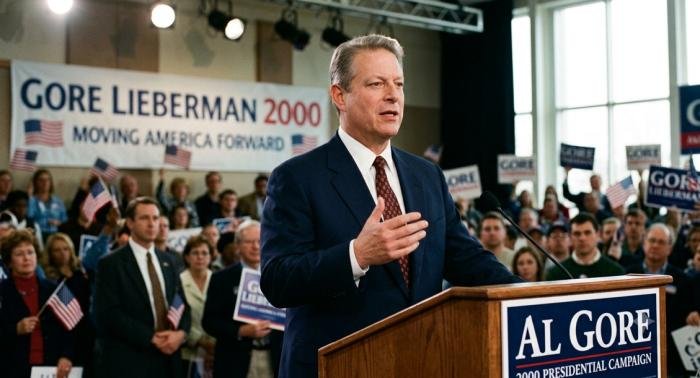
The 2000 U.S. presidential election remains one of the most closely watched and debated elections in American history. It was a race that reshaped political discussions, highlighted the importance of the Electoral College, and demonstrated how a single state’s results could determine the next president.
If you’ve ever wondered who ran against George W Bush in 2000, the simple answer is Al Gore, the Democratic nominee and then-serving Vice President of the United States. However, the story goes far beyond identifying Bush’s opponent.
The election featured a razor-thin margin, a controversial recount in Florida, a landmark Supreme Court decision, and a result that continues to influence conversations about election laws and voting systems today.
Read More: Robert W. Kirk: Biography, Career, Achievements & Legacy
Quick Answer Who Ran Against George W Bush in 2000?
If you’re searching who ran against George W Bush in 2000, the answer is Al Gore, the Democratic Party’s presidential nominee. George W. Bush represented the Republican Party after serving as the Governor of Texas, while Al Gore entered the race after serving two terms as Vice President under President Bill Clinton.
Although Al Gore received more votes nationwide, George W. Bush won the Electoral College after an extended legal dispute over Florida’s election results. Bush officially became the 43rd President of the United States, making the 2000 election one of the most significant in American political history.
Overview of the 2000 U.S. Presidential Election
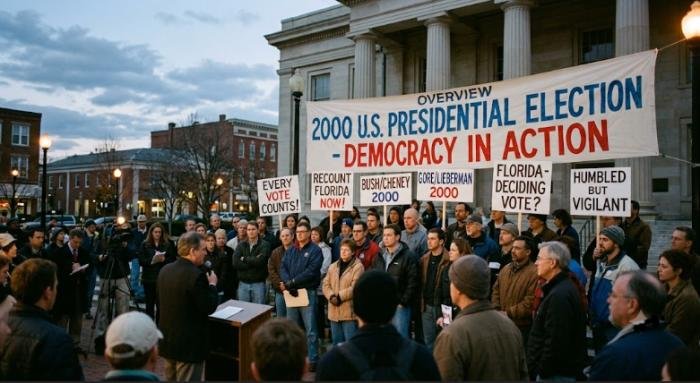
The 2000 presidential election took place on November 7, 2000. At first glance, it appeared to be a routine contest between the Republican and Democratic parties. Instead, it became one of the closest elections the United States has ever experienced.
Many political analysts expected a competitive race because the country was enjoying a strong economy, yet voters remained divided over issues such as taxes, education, healthcare, Social Security, and the future direction of federal government policies.
One of the reasons people continue searching who ran against George W Bush in 2000 is because the election had lasting constitutional and political consequences that extended well beyond Election Day.
Why Was the 2000 Election Historic?
Several factors make this election unique:
- One of the closest presidential races in U.S. history
- Extremely narrow margin in Florida
- Weeks of recounts and legal challenges
- A historic Supreme Court decision
- The popular vote winner did not become president
- Increased public attention on election procedures and voting systems
Major Presidential Candidates
While the election is best remembered as a contest between Bush and Gore, several candidates appeared on ballots across the country.
| Candidate | Political Party | Position Before Election |
| George W. Bush | Republican | Governor of Texas |
| Al Gore | Democratic | Vice President of the United States |
| Ralph Nader | Green Party | Consumer Advocate |
| Pat Buchanan | Reform Party | Conservative Commentator |
| Harry Browne | Libertarian Party | Author and Economist |
Although third-party candidates received far fewer votes, they influenced campaign discussions and, according to many political analysts, may have affected voting patterns in several closely contested states.
Who Was Al Gore?

Anyone researching who ran against George W Bush in 2000 should understand why Al Gore was considered a strong presidential candidate. Al Gore had decades of political experience before entering the race. He served in the U.S. House of Representatives, later became a U.S.
Senator, and then spent eight years as Vice President under President Bill Clinton from 1993 to 2001. Because of this experience, many voters viewed Gore as someone capable of continuing the economic growth and policy direction of the Clinton administration.
Political Background
Before seeking the presidency, Al Gore had established a reputation for working on issues including:
- Environmental protection
- Technology and innovation
- Government modernization
- Telecommunications policy
- Education
- Economic development
Why Did Al Gore Become the Democratic Nominee?
The Democratic Party selected Gore because he combined executive experience with national recognition. His campaign focused on:
- Protecting Social Security
- Expanding healthcare access
- Improving public education
- Continuing economic prosperity
- Environmental conservation
- Fiscal responsibility
George W. Bush’s Campaign
George W. Bush entered the race after serving as Governor of Texas. His campaign emphasized a message of “compassionate conservatism,” which aimed to combine conservative economic policies with broader efforts to improve education and strengthen communities. Many voters viewed Bush as a candidate who could bring a different leadership style to Washington.
Republican Platform
Bush’s campaign centered on several major policy priorities:
- Tax cuts for individuals and businesses
- Education reform with greater accountability
- Strengthening national defense
- Limiting federal government growth
- Medicare improvements
- Faith-based community initiatives
Campaign Strategy
Bush’s campaign invested heavily in states that could determine the outcome of the Electoral College. The strategy focused on:
- Winning competitive swing states
- Appealing to suburban voters
- Building strong grassroots organizations
- Performing effectively during televised debates
- Maintaining a positive public image
Bush vs. Gore Comparing the Two Candidates
When asking who ran against George W Bush in 2000, it’s helpful to compare the two candidates directly.
Political Experience
George W. Bush served as Governor of Texas and highlighted his executive leadership experience. Al Gore brought decades of federal government experience, including his service as Vice President.
Economic Policies
Bush supported reducing taxes, arguing that lower taxes would encourage economic growth and investment. Gore favored targeted tax relief while supporting continued federal investment in education, healthcare, and other public programs.
Education
Education became one of the defining issues of the campaign. Bush promoted greater accountability for schools, standardized testing, and local control. Gore advocated increased federal funding, smaller class sizes, and expanded educational opportunities.
Healthcare
Healthcare represented another major difference. Bush proposed market-based reforms and expanding prescription drug coverage through Medicare. Gore supported broader healthcare coverage while preserving existing public programs.
Leadership Style
Bush campaigned as a consensus builder focused on practical reforms. Gore emphasized experience, policy expertise, and continuity after the Clinton administration. Although their policy differences were significant, both candidates promised economic growth, educational improvement, and stronger national security.
Why This Election Still Matters Today
More than two decades later, historians, legal scholars, and political analysts continue to examine the 2000 election because it changed how Americans think about elections.
Understanding who ran against George W Bush in 2000 is only the starting point. The election raised lasting questions about vote counting, ballot design, recount procedures, election administration, and the relationship between the popular vote and the Electoral College.
Its impact can still be seen in discussions about election security, voting technology, and legal standards for recounts. The lessons from 2000 continue to influence policymakers and election officials seeking to improve transparency and public confidence in the democratic process.
2000 Election Results: Who Won and By How Much?
Understanding the official election results is essential when exploring who ran against George W Bush in 2000. Although the race was between George W. Bush and Al Gore, the final outcome was determined not by the national popular vote but by the Electoral College.
Electoral Vote Results
The Electoral College determines the winner of a U.S. presidential election. Each state is assigned a specific number of electoral votes based on its representation in Congress, and in most states, the candidate who wins the state’s popular vote receives all of its electoral votes. The certified results of the 2000 election were:
- George W. Bush (Republican): 271 electoral votes
- Al Gore (Democrat): 266 electoral votes
- One elector from the District of Columbia abstained, leaving one electoral vote uncast.
Popular Vote Results
The national popular vote told a different story.
- Al Gore: Approximately 50.99 million votes (48.4%)
- George W. Bush: Approximately 50.46 million votes (47.9%)
Al Gore received more votes nationwide than George W. Bush, making this one of the rare presidential elections in which the popular vote winner did not become president.
This is one of the main reasons people continue searching who ran against George W Bush in 2000, as the election illustrates how the Electoral College can produce a different outcome than the national popular vote.
Why Was Florida So Important?
No discussion of who ran against George W Bush in 2000 would be complete without examining Florida. The entire election ultimately came down to this single state because its electoral votes would decide who reached the required majority.
An Extremely Narrow Margin
Election night initially produced conflicting projections. Television networks declared Florida for Gore, then for Bush, and eventually labeled it “too close to call.” After all ballots were counted, Bush’s lead was only a few hundred votes out of nearly six million cast. State law required an automatic machine recount because of the exceptionally close margin.
Ballot Design and Voting Issues
Several counties experienced problems involving:
- Punch-card ballots
- Hanging chads
- Dimpled ballots
- Voter confusion
- Inconsistent counting standards
Manual Recounts
Al Gore requested manual recounts in several counties where voting irregularities were reported. Supporters argued that every valid vote deserved careful review. Bush’s campaign maintained that existing certified results should stand unless clear legal grounds justified further recounts. The disagreement quickly evolved into one of the most significant legal disputes in American election history.
The Bush v. Gore Supreme Court Decision
As recounts continued, lawsuits moved through Florida courts before eventually reaching the U.S. Supreme Court. In Bush v. Gore, decided on December 12, 2000, the Court ruled that the varying recount standards used across counties raised constitutional concerns under the Equal Protection Clause.
The decision effectively ended the statewide recount process, allowing Florida’s certified results to remain in place. As a result, George W. Bush retained Florida’s electoral votes and officially won the presidency. The case remains one of the most frequently studied Supreme Court decisions involving election law and constitutional principles.
Why Did George W. Bush Win Despite Losing the Popular Vote?
Many readers asking who ran against George W Bush in 2000 also wonder how Bush became president despite receiving fewer votes nationwide. The answer lies in the Electoral College. The U.S. Constitution establishes that presidents are elected through electoral votes rather than the national popular vote.
Winning large states by narrow margins can produce enough electoral votes to win the presidency, even if another candidate receives more total votes across the country. This has occurred only a handful of times in American history, making the 2000 election especially significant.
Timeline of the 2000 Presidential Election
Understanding the sequence of events helps explain why the election remains so memorable. Key Dates:
Early 2000: Primary elections determine party nominees.
Summer 2000: Republican and Democratic national conventions officially nominate George W. Bush and Al Gore.
Fall 2000: Presidential debates focus on taxes, healthcare, education, and Social Security.
November 7, 2000: Americans vote in the general election.
November–December 2000: Florida recounts and legal challenges continue.
December 12, 2000: Supreme Court issues its decision in Bush v. Gore.
December 18, 2000: Electoral College formally elects George W. Bush.
January 20, 2001: Bush is inaugurated as the 43rd President of the United States.
Key Issues That Shaped the Election
Although the recount received the most attention, the campaign itself focused on several important policy topics.
The Economy: The United States was experiencing strong economic growth, low unemployment, and budget surpluses. Both candidates promised continued prosperity but proposed different approaches.
Taxes: Bush advocated broad tax cuts to stimulate economic growth. Gore favored more targeted tax reductions while maintaining funding for government programs.
Education: Education became a defining campaign issue. Bush promoted accountability, testing standards, and local flexibility. Gore emphasized increased federal investment, teacher support, and smaller class sizes.
Healthcare: Both candidates supported expanding prescription drug coverage for seniors but disagreed on the federal government’s role in healthcare reform.
Social Security: Protecting Social Security remained a priority for both campaigns, although each proposed different long-term strategies.
Lasting Impact of the 2000 Election
Common Misconceptions
Myth: The Popular Vote Always Decides the Winner
Fact: Presidential elections are decided by the Electoral College, not the national popular vote.
Myth: Only Two Candidates Appeared on the Ballot
Fact: Third-party candidates such as Ralph Nader, Pat Buchanan, and Harry Browne also participated, although they received far fewer votes.
Myth: Florida Was the Only Important State
Fact: Every state’s electoral votes mattered throughout the campaign. Florida became decisive only because of the extremely close nationwide Electoral College count.
Key Facts at a Glance
Election Date: November 7, 2000
Republican Nominee: George W. Bush
Democratic Nominee: Al Gore
Popular Vote Winner: Al Gore
Electoral College Winner: George W. Bush
Decisive State: Florida
Landmark Court Case: Bush v. Gore
President Elected: George W. Bush
Conclusion
For anyone asking who ran against George W Bush in 2000, the answer is straightforward: Al Gore was his Democratic opponent. Yet the election’s importance extends far beyond identifying the candidates. The 2000 presidential election became a defining moment in American history because of its exceptionally close results, the disputed Florida recount, and the Supreme Court’s decision in Bush v. Gore.
It also highlighted the distinction between the national popular vote and the Electoral College, reminding voters that presidential elections are decided through a constitutional process rather than the nationwide vote total alone.
More than two decades later, the lessons of the 2000 election continue to shape election administration, legal debates, and public discussions about democracy in the United States. Understanding this historic contest provides valuable insight into how the American electoral system works and why the election remains one of the most analyzed in modern political history.
FAQs
Q1: Who ran against George W Bush in 2000?
Ans: The Democratic Party nominee, Al Gore, ran against George W. Bush in the 2000 U.S. presidential election. Gore was serving as Vice President under President Bill Clinton during the campaign.
Q2: Who won the 2000 presidential election?
Ans: George W. Bush won the presidency by securing 271 electoral votes, despite receiving fewer votes than Al Gore in the national popular vote.
Q3: Did Al Gore win the popular vote?
Ans: Yes. Al Gore received approximately half a million more popular votes nationwide than George W. Bush.
Q4: Why was Florida so important?
Ans: Florida’s electoral votes determined which candidate reached the majority needed to win the Electoral College. The state’s extremely narrow margin triggered recounts and legal challenges.
Q5: What was Bush v. Gore?
Ans: Bush v. Gore was a U.S. Supreme Court case decided on December 12, 2000. The ruling ended the Florida recount, allowing the certified election results to stand.
Q6: Can a president win without the popular vote?
Ans: Yes. Because the United States elects presidents through the Electoral College, a candidate can lose the national popular vote but still win enough electoral votes to become president.
Q7: Why is the 2000 election still studied today?
Ans: Historians, legal scholars, and political scientists continue studying the election because it influenced election law, voting procedures, recount standards, and public understanding of the Electoral College.