
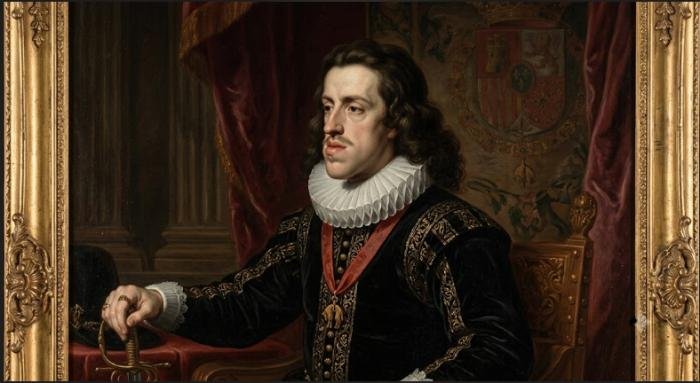
The Habsburg jaw is one of the most famous inherited facial traits in history. Often associated with European royalty, it has fascinated historians, geneticists, dentists, and medical researchers for centuries. The distinctive protruding lower jaw became especially noticeable among members of the House of Habsburg, one of Europe’s most powerful royal dynasties. Their long tradition of marrying within a limited circle of noble families has made the Habsburg jaw a widely discussed example of how genetics and family lineage can shape physical characteristics.
Today, the Habsburg jaw is more than a historical curiosity. It serves as a valuable case study for understanding hereditary traits, genetic diversity, and the importance of responsible genetic research. Modern scientific studies have revisited historical records, family trees, and royal portraits to better understand why this facial feature became so prominent and what it can teach us about inherited conditions.
In this article, you’ll discover what the Habsburg jaw is, how it became associated with European royalty, the genetic factors behind it, and why researchers continue to study it today. Whether you’re interested in history, genetics, or royal families, this guide provides a balanced, evidence-based explanation that separates facts from myths.
Read More: Mega Tsunami Warning What It Means, Warning Signs, Risks & Safety Tips
What Is the Habsburg Jaw?
The Habsburg jaw refers to a distinctive facial feature characterized by a prominent lower jaw, an extended chin, and, in many cases, a protruding lower lip. In medical terminology, the condition is often linked with mandibular prognathism, where the lower jaw extends farther forward than the upper jaw.
Although many people casually refer to it as a disease, the Habsburg jaw itself is not a disease. Instead, it is an inherited anatomical trait that can vary in severity. Some individuals may have only a slightly pronounced chin, while others experience more significant jaw alignment issues that can affect chewing, speaking, or dental health.
The feature became strongly associated with the House of Habsburg because it appeared repeatedly across multiple generations. Portraits of Habsburg rulers from the 15th to the 17th centuries often show remarkably similar facial characteristics, making the trait one of the most recognizable examples of hereditary inheritance in royal history.
Key Physical Characteristics
The Habsburg jaw is commonly associated with several recognizable features:
- A protruding lower jaw
- A prominent chin
- A larger-than-average lower lip
- An elongated facial appearance
- Dental misalignment or underbite
- Difficulty fully closing the mouth in severe cases
It’s important to remember that these features exist on a spectrum. Not every member of the Habsburg family displayed all of these characteristics, and the severity varied considerably from one generation to the next.
Is the Habsburg Jaw a Medical Condition?
One of the biggest misconceptions is that the Habsburg jaw is a standalone medical diagnosis. In reality, it is better understood as a hereditary facial characteristic that may overlap with recognized dental or skeletal conditions such as mandibular prognathism or malocclusion.
Modern medicine evaluates jaw structure using imaging, dental examinations, and functional assessments rather than historical labels. Some people with similar jaw structures never experience health problems, while others may require orthodontic treatment or corrective jaw surgery to improve function.
The House of Habsburg: A Dynasty That Shaped Europe
To understand why the Habsburg jaw became so well known, it’s essential to understand the remarkable history of the House of Habsburg.The Habsburg dynasty originated in what is now Switzerland during the 11th century. Over time, strategic marriages, political alliances, and territorial expansion transformed the family into one of Europe’s most influential ruling houses.
At various points in history, Habsburg monarchs governed vast territories that included modern-day Austria, Spain, Hungary, the Netherlands, parts of Italy, and regions within the Holy Roman Empire.Rather than relying primarily on military conquest, the Habsburgs became famous for expanding their influence through carefully arranged marriages. This strategy was summarized by the well-known phrase:
These marriages helped preserve wealth, strengthen political alliances, and maintain control over royal succession. However, over generations, repeatedly marrying close relatives reduced genetic diversity within the family.While historians once focused mainly on the political success of these unions, modern researchers have also examined their biological consequences, making the Habsburg dynasty a frequently cited example in discussions about inherited traits.
Why Did the Habsburgs Marry Within the Family?
Royal marriages during medieval and early modern Europe were rarely based on romance. Instead, they served practical political purposes.The Habsburg family often arranged marriages to:
- Preserve royal bloodlines
- Protect inheritance rights
- Strengthen diplomatic alliances
- Prevent rival families from gaining influence
- Consolidate political power
Although these goals were politically effective, they also increased the likelihood that close relatives would share similar genetic variants. Over several generations, this practice may have contributed to the repeated appearance of inherited physical characteristics, including the Habsburg jaw.
It is important to note, however, that historians and geneticists avoid attributing every health issue in the dynasty solely to intermarriage. Human genetics is complex, and many inherited traits result from the interaction of multiple genes rather than a single cause.
How Did the Habsburg Jaw Become So Famous?
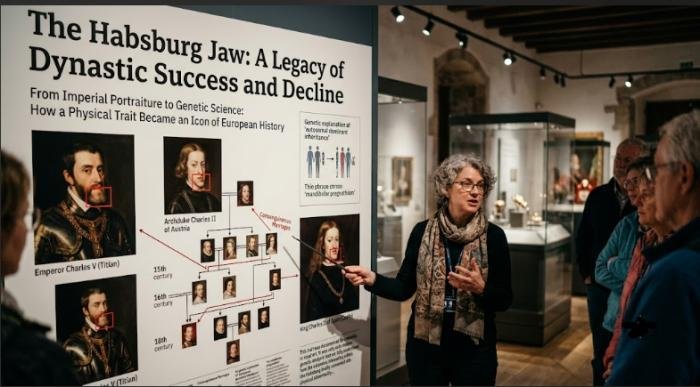
Unlike many inherited traits that remain largely unnoticed outside a family, the Habsburg jaw became widely recognized because Europe’s royal families were extensively documented.Royal portraits, official paintings, sculptures, coins, and written descriptions preserved detailed images of monarchs for centuries.Court artists often idealized their subjects, yet many portraits consistently show members of the Habsburg family with similar facial structures, particularly a pronounced lower jaw and chin.
Modern researchers have analyzed these portraits alongside historical family trees.While artistic interpretation means portraits cannot be treated as perfect medical evidence, the repeated appearance of comparable facial features across generations supports historical accounts that the trait was common within the dynasty.
The increased availability of digital archives has also allowed historians, dentists, and genetic researchers to compare portraits more systematically than ever before. This interdisciplinary approach combines art history, genealogy, and medical science to provide a more balanced understanding of the family’s physical characteristics.
The Genetic Foundations of the Habsburg Jaw
The story of the Habsburg jaw is ultimately a story about inheritance. Every person receives genetic material from both parents, and many facial features—including jaw shape, chin prominence, and dental alignment—are influenced by multiple genes working together.
Unlike traits controlled by a single gene, facial development is considered polygenic, meaning that numerous genes contribute to the final appearance. Environmental factors such as nutrition and childhood growth can also influence how these traits develop.
Because the Habsburg family repeatedly married within a relatively limited pool of relatives, certain inherited characteristics were more likely to be passed from one generation to the next. This did not guarantee that every descendant would have the same facial features, but it increased the probability that shared genetic variants would continue appearing within the family line.
Modern geneticists caution against reducing the Habsburg jaw to a single genetic mutation. Instead, current evidence suggests it likely resulted from a complex combination of inherited genetic factors expressed over many generations.
How Genetics and Inbreeding Influenced the Habsburg Jaw
The connection between the Habsburg jaw and royal inbreeding has attracted scientific attention for decades. While historians had long suspected that repeated marriages between close relatives contributed to the family’s distinctive appearance, modern research has provided stronger evidence by combining genealogy, anthropology, dentistry, and genetics.
It is important to understand that no single study has identified one specific gene responsible for the Habsburg jaw. Instead, researchers believe the condition resulted from the interaction of multiple inherited genes whose effects became more visible because of generations of limited genetic diversity.
The Role of Genetics in Facial Development
Every person’s facial structure is influenced by a combination of inherited genes and environmental factors. The size and position of the jaw, shape of the chin, spacing of the teeth, and alignment of the bite all develop through a complex genetic process.
Scientists classify many facial characteristics as polygenic traits, meaning they are controlled by numerous genes rather than a single genetic mutation. This explains why even members of the same family can have noticeable differences in appearance.Several factors contribute to jaw development, including:
- Bone growth during childhood
- Hormonal influences
- Genetic inheritance from both parents
- Nutrition during developmental years
- Overall skeletal development
What Is Inbreeding?
In genetics, inbreeding refers to reproduction between individuals who are more closely related than the average population. When close relatives have children, they are more likely to carry the same genetic variants inherited from shared ancestors.
This does not automatically lead to health problems. However, it increases the chance that certain inherited traits—including rare recessive characteristics—will appear more frequently in future generations.
For the House of Habsburg, political marriages often occurred between first cousins, uncles and nieces, or other close relatives. These unions helped maintain political alliances and preserve control of royal territories but also reduced the family’s genetic diversity.Today, genetic counselors generally recommend avoiding close-relative marriages because greater genetic diversity lowers the risk of certain inherited disorders.
Scientific Research on the Habsburg Jaw
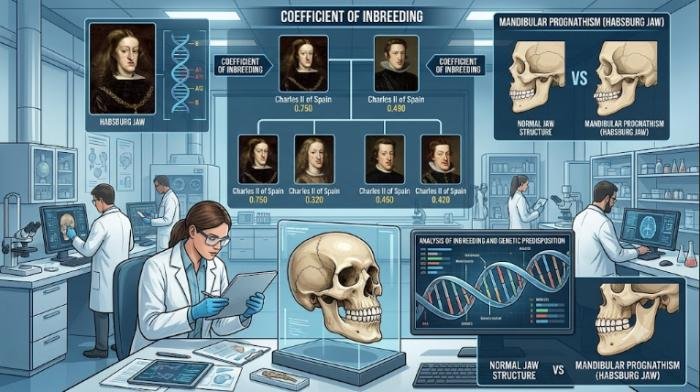
One of the most significant modern investigations into the Habsburg jaw involved researchers who examined historical portraits of Habsburg rulers and compared them with detailed family trees.Specialists in orthodontics and maxillofacial anatomy evaluated portraits spanning several generations.
Although paintings cannot replace medical examinations, researchers found consistent patterns of mandibular prognathism and maxillary deficiency among many members of the dynasty.They also calculated each ruler’s inbreeding coefficient, a measure used in genetics to estimate how closely related an individual’s parents were.Their findings suggested a strong relationship between increasing inbreeding and the severity of the facial traits associated with the Habsburg jaw.
Individuals with higher inbreeding coefficients generally displayed more pronounced jaw abnormalities than those with lower coefficients.Researchers emphasized, however, that correlation does not prove a direct genetic cause. Facial development remains a complex biological process involving many interacting genes.
The Difference Between the Habsburg Jaw and an Underbite
Many people assume the Habsburg jaw simply means having an underbite, but the two terms are not identical.An underbite describes a dental condition in which the lower teeth extend beyond the upper teeth. It focuses primarily on bite alignment.
The Habsburg jaw refers to a broader facial appearance that may include:
| Feature | Habsburg Jaw | Typical Underbite |
| Prominent lower jaw | Yes | Often |
| Enlarged chin | Common | Sometimes |
| Lower lip protrusion | Common | Less common |
| Facial appearance | Distinctive | May vary |
| Dental misalignment | Often present | Primary characteristic |
| Multiple inherited traits | Yes | Not always |
Famous Members of the Habsburg Family With the Trait
Although not every Habsburg ruler displayed the feature to the same degree, several monarchs are frequently cited by historians and researchers.
Emperor Charles V: Charles V ruled one of the largest empires in European history during the 16th century.Historical portraits consistently show:
- A pronounced lower jaw
- A large chin
- Thick lower lip
- Difficulty fully closing the mouth
Contemporary accounts even mention that eating and speaking could sometimes be challenging because of his facial structure.Despite these physical characteristics, Charles V was a capable military and political leader whose reign shaped European history.
King Philip IV of Spain: Philip IV also displayed recognizable features associated with the Habsburg jaw.Portraits painted by Diego Velázquez clearly illustrate his elongated face and prominent lower jaw.Compared with some later Habsburg rulers, however, Philip IV’s facial characteristics appear less severe, reminding us that inherited traits often vary between individuals.
Charles II of Spain: Perhaps the most frequently discussed member of the dynasty is Charles II of Spain.Modern historians often describe him as exhibiting one of the most severe examples of the Habsburg jaw.Beyond his facial appearance, Charles II experienced numerous health problems throughout his life, including:
- Difficulty chewing food
- Speech challenges
- Physical weakness
- Reproductive problems
- Chronic illness
Many historians believe these health issues reflected the cumulative effects of generations of close-relative marriages rather than the jaw structure alone.Charles II died in 1700 without an heir, bringing the Spanish branch of the House of Habsburg to an end and triggering the War of the Spanish Succession.
Did Every Habsburg Have the Habsburg Jaw?
A common misconception is that every member of the dynasty inherited the same facial appearance.Because facial development depends on multiple genes, inheritance varied from one generation to another.Some family members showed:
- Mild chin prominence
- Slight lower jaw projection
- Nearly typical facial proportions
Others displayed far more noticeable skeletal differences.This variation actually supports modern genetic understanding. If the Habsburg jaw resulted from multiple interacting genes rather than one dominant mutation, differences in severity are exactly what scientists would expect.
Modern Diagnosis, Treatment, and Lessons From the Habsburg Jaw
Although the Habsburg jaw is best known as a historical trait, modern medicine has significantly improved the diagnosis and treatment of jaw abnormalities. Today, orthodontists, oral and maxillofacial surgeons, and genetic specialists use advanced imaging techniques and personalized treatment plans to evaluate jaw structure and recommend the most appropriate care.
Unlike members of the Habsburg dynasty, people with similar jaw characteristics now have access to treatments that can improve both function and appearance. This progress highlights how medical science has evolved from simply observing inherited traits to understanding their underlying causes and addressing them effectively.
How Doctors Diagnose Jaw Abnormalities Today
Diagnosing a prominent lower jaw involves more than a visual examination. Healthcare professionals consider several factors before determining whether treatment is necessary.Modern diagnostic methods include:
- Comprehensive dental examinations
- Digital X-rays and 3D imaging
- Bite and jaw alignment analysis
- Facial symmetry assessment
- Medical and family history review
- Orthodontic evaluations
These assessments help distinguish between a naturally prominent jaw and conditions that may affect chewing, speaking, breathing, or long-term oral health.Importantly, not everyone with a noticeable lower jaw requires medical treatment. If the jaw functions normally and does not cause discomfort or dental complications, intervention may not be needed.
Treatment Options for Similar Jaw Conditions
While the Habsburg jaw itself is a historical term, people with mandibular prognathism or significant underbites can benefit from several modern treatment options.
Orthodontic Treatment: For children and teenagers, orthodontic appliances such as braces or specialized devices may guide jaw development while the bones are still growing. Early intervention can improve bite alignment and reduce the need for surgery later in life.
Corrective Jaw Surgery: Adults with severe skeletal jaw differences may be candidates for orthognathic (corrective jaw) surgery. This procedure repositions the upper jaw, lower jaw, or both to improve:
- Bite function
- Speech clarity
- Chewing efficiency
- Facial balance
- Long-term oral health
Surgery is typically combined with orthodontic treatment before and after the procedure to achieve the best results.
Personalized Care: Treatment decisions depend on each person’s unique anatomy, symptoms, and goals. Modern medicine emphasizes individualized care rather than focusing solely on appearance.
Common Myths About the Habsburg Jaw
Because the Habsburg jaw has become a popular topic online, several misconceptions continue to circulate. Understanding the facts helps separate history from speculation.
Every Habsburg Had the Trait
Fact: The severity varied greatly among family members. Some displayed a pronounced jaw, while others showed only mild facial differences.
One Gene Caused the Habsburg Jaw
Fact: Current evidence suggests that facial structure is influenced by multiple genes rather than a single “Habsburg jaw gene.”
Royal Portraits Are Perfect Medical Evidence
Fact: Portraits provide useful historical clues, but artists often idealized or stylized their subjects. Researchers use portraits alongside genealogical records and historical documentation rather than relying on artwork alone.
The Trait Was Only Cosmetic
Fact: In severe cases, individuals likely experienced functional challenges, including dental misalignment, chewing difficulties, and speech issues.
What Makes the Habsburg Jaw a Valuable Scientific Case Study?
Many articles discuss the Habsburg dynasty but overlook why researchers continue studying the Habsburg jaw today.Its significance extends beyond royal history because it demonstrates several important scientific concepts:
- How inherited traits can become more common in isolated family lines.
- Why genetic diversity benefits long-term population health.
- The interaction between genetics and physical development.
- The value of combining history, medicine, and anthropology in scientific research.
The Habsburg family is unusual because historians have preserved detailed family trees, portraits, letters, and official records over many centuries. This extensive documentation allows researchers to investigate hereditary patterns that would be difficult to study in most historical populations.
Practical Lessons for Modern Families
The story of the Habsburg jaw offers practical lessons that remain relevant today.
Understand Your Family Medical History
Knowing your family’s history of inherited conditions can help healthcare providers identify potential risks and recommend appropriate screenings.
Seek Professional Advice Early
If a child develops significant bite problems or jaw misalignment, early evaluation by a dental professional can often simplify treatment and improve long-term outcomes.
Avoid Self-Diagnosis
A prominent chin or underbite does not automatically indicate the historical Habsburg jaw or a serious medical condition. Only qualified healthcare professionals can provide an accurate diagnosis.
Appreciate the Complexity of Genetics
Human traits rarely have a single cause. Genetics, environment, growth patterns, and individual variation all influence how facial features develop.
Expert Perspective: Why the Habsburg Jaw Still Captivates Researchers
One reason the Habsburg jaw continues to attract attention is that it sits at the crossroads of several disciplines. Historians study it to understand royal succession and political alliances, geneticists examine it as an example of inherited variation, and dental specialists use it to illustrate craniofacial development.
This multidisciplinary interest makes the Habsburg jaw more than a historical curiosity it is an educational case that demonstrates how biology and history can intersect. It also reminds us that modern scientific conclusions are strongest when they draw upon multiple sources of evidence rather than relying on a single portrait, anecdote, or family legend.
By examining the Habsburg dynasty through today’s scientific lens, we gain a more accurate and balanced understanding of heredity, while avoiding exaggerated claims that often appear in popular discussions.
Conclusion
The Habsburg jaw is far more than an unusual feature seen in royal portraits. It represents the fascinating intersection of history, genetics, medicine, and human inheritance. Through centuries of strategic marriages, the House of Habsburg unintentionally created one of history’s most recognizable examples of how limited genetic diversity can influence physical traits.
Modern research has helped separate myths from evidence. While inbreeding likely played a significant role in increasing the prevalence of the trait, scientists now understand that facial development is shaped by many interacting genes rather than a single inherited mutation. This nuanced perspective reminds us that genetics is rarely simple and that historical conclusions should be based on careful scientific analysis rather than popular assumptions.
The legacy of the Habsburg jaw also offers meaningful lessons for today. Advances in genetics, orthodontics, and maxillofacial surgery have transformed how similar conditions are diagnosed and treated. At the same time, the Habsburg story highlights the importance of genetic diversity and the value of interdisciplinary research that combines history, medicine, and biology.
Whether your interest lies in European royal history, hereditary traits, or the science of human development, the Habsburg jaw remains a compelling subject that continues to educate researchers and captivate readers around the world. By understanding both the historical context and the modern scientific evidence, we gain a deeper appreciation for how the past can inform our knowledge of genetics and human health today.
FAQs
Q1: What is the Habsburg jaw?
Ans: The Habsburg jaw is a hereditary facial trait characterized by a prominent lower jaw, extended chin, and often a protruding lower lip. It became closely associated with the House of Habsburg because the feature appeared repeatedly across several generations of the royal family. While it is commonly linked to mandibular prognathism, the term itself is historical rather than a formal medical diagnosis.
Q2: Was the Habsburg jaw caused by inbreeding?
Ans: Research suggests that repeated marriages between closely related members of the Habsburg dynasty likely increased the expression of inherited facial traits, including the Habsburg jaw. However, scientists believe the feature resulted from the interaction of multiple genes rather than a single genetic mutation. Inbreeding likely increased the probability that these inherited characteristics became more pronounced over time.
Q3: Which Habsburg ruler had the most severe jaw?
Ans: Charles II of Spain is widely regarded as having one of the most pronounced examples of the Habsburg jaw. Historical accounts and royal portraits describe a significantly protruding lower jaw along with numerous health problems. While his appearance has become symbolic of the dynasty’s genetic challenges, modern researchers caution against attributing all of his medical conditions solely to jaw structure.
Q4: Is the Habsburg jaw the same as an underbite?
Ans: Not exactly. An underbite is a dental condition in which the lower teeth extend beyond the upper teeth. The Habsburg jaw refers to a broader facial appearance that may include a prominent chin, protruding lower jaw, and characteristic facial profile. Although many individuals with the Habsburg jaw also had an underbite, the two terms are not interchangeable.
Q5: Can the Habsburg jaw still occur today?
Ans: Yes. Similar jaw structures can occur in modern populations because facial features are inherited through genetics. However, people with a prominent lower jaw are not descendants of the Habsburg family simply because they share a similar appearance. Many unrelated genetic combinations can produce comparable facial characteristics.
Q6: Can the Habsburg jaw be treated?
Ans: Modern medicine offers several effective treatment options when jaw structure causes functional problems. Orthodontic treatment, braces, growth-modifying appliances for children, and orthognathic (corrective jaw) surgery can improve bite alignment, chewing, speech, and facial balance. Treatment depends on the severity of the condition and the individual’s overall oral health.
Q7: Why did the Habsburg family marry close relatives?
Ans: Royal marriages during the medieval and early modern periods were primarily political. The Habsburgs arranged marriages within a limited group of noble families to preserve wealth, strengthen alliances, protect inheritance rights, and maintain control over their territories. Although this strategy helped expand their political influence, it also reduced genetic diversity within the dynasty.
Q8: Why is the Habsburg jaw still studied today?
Ans: The Habsburg jaw remains an important topic because it provides a unique historical example of hereditary inheritance, genealogy, and population genetics. The extensive documentation of the Habsburg family—including portraits, written records, and detailed family trees—allows researchers to study how inherited traits may become more common within closely related populations.
