
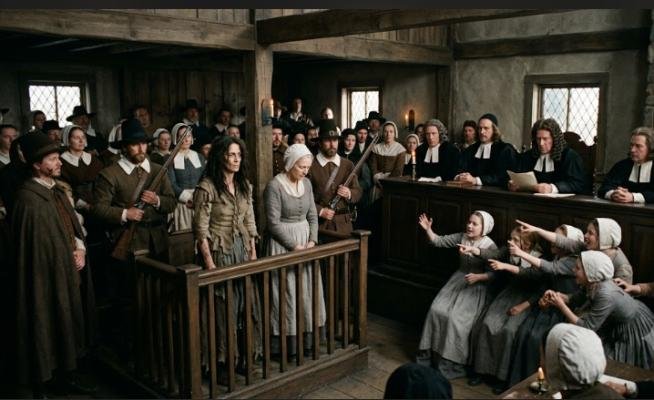
The Salem Witch Trials remain one of the most studied and debated events in American history. Taking place in 1692 and 1693 in the Massachusetts Bay Colony, the trials resulted in the imprisonment of more than 150 people, the execution of 20 individuals, and lasting damage to countless families and communities. Although the events occurred more than three centuries ago, they continue to serve as a powerful reminder of the dangers of fear, misinformation, religious extremism, and failures within the justice system.
The story of the Salem Witch Trials is not simply about accusations of witchcraft. It is a story of a society struggling with political uncertainty, religious tensions, frontier conflicts, disease, and personal rivalries. These pressures combined to create an atmosphere in which rumors spread quickly, evidence was poorly evaluated, and innocent people paid the ultimate price.
Today, historians rely on court records, letters, government documents, and other primary sources to reconstruct what happened in Salem. Their research provides a clearer picture of how ordinary people became caught in extraordinary circumstances. The lessons from these events continue to influence discussions about justice, due process, human rights, and the consequences of mass hysteria.
In this article, you’ll learn what the Salem Witch Trials were, why they happened, how they unfolded, and the historical context that made one of America’s darkest chapters possible.
Read More: Habsburg Jaw History, Genetics, and the Royal Family Legacy
What Were the Salem Witch Trials?
The Salem Witch Trials were a series of investigations and court proceedings that took place between 1692 and 1693 in colonial Massachusetts. During this period, many residents were accused of practicing witchcraft, which was considered both a religious sin and a criminal offense under English law.
The accusations quickly spread beyond a few individuals. As fear increased, neighbors accused neighbors, family members testified against one another, and local officials struggled to separate fact from superstition. The courts accepted questionable forms of evidence, including claims that an accused person’s spirit had harmed others through supernatural means.By the time the crisis ended:
- More than 200 people had been accused of witchcraft.
- Over 150 individuals were jailed.
- Nineteen people were executed by hanging.
- One man, Giles Corey, died after being pressed with heavy stones during interrogation.
- Several others died while imprisoned.
Although the trials lasted little more than a year, their consequences extended far beyond colonial New England. They eventually prompted public apologies, legal reforms, and a greater emphasis on reliable evidence in American courts.
When and Where Did the Salem Witch Trials Take Place?
The Salem Witch Trials occurred primarily in Salem Village, now known as Danvers, Massachusetts, and Salem Town, located a few miles away.At the time, both communities were part of the Massachusetts Bay Colony, an English colony governed largely by Puritan religious principles.While the trials are commonly associated with Salem, accusations also spread into neighboring towns, including:
- Andover
- Ipswich
- Topsfield
- Beverly
- Gloucester
The widespread nature of the accusations demonstrates that the crisis affected much more than a single village. Communities across the region became involved as fear and suspicion expanded.
Why Are the Salem Witch Trials Still Important Today?
The Salem Witch Trials have become a lasting symbol of injustice caused by fear and unchecked accusations. Historians, legal scholars, and educators continue to study the events because they reveal how social pressure and weak legal safeguards can lead to tragic outcomes.Several important lessons continue to resonate today:
- The importance of fair trials
- The need for credible evidence
- Protection of individual rights
- Dangers of mass panic
- Consequences of false accusations
- Importance of independent courts
Modern discussions about misinformation, public fear, and wrongful convictions often reference the Salem Witch Trials as a historical example of how quickly communities can abandon reason during times of crisis.
Historical Background Before the Salem Witch Trials
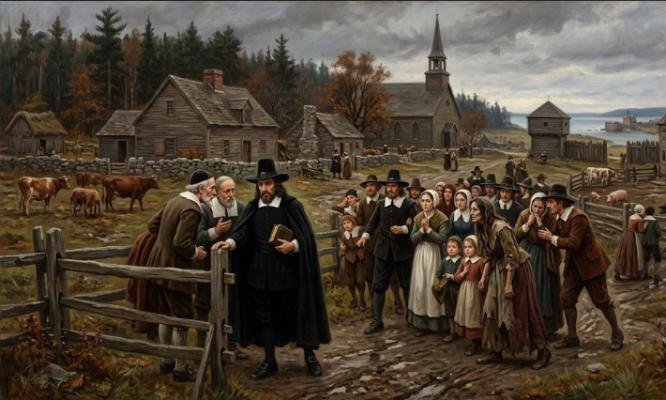
Understanding the Salem Witch Trials requires examining the conditions that existed long before the first accusation. The trials did not emerge suddenly. Instead, they developed within a society already experiencing religious, political, economic, and social pressures.
Life in Colonial Massachusetts
In the late seventeenth century, life in the Massachusetts Bay Colony was challenging. Most people depended on farming, livestock, and local trade to survive. Harsh winters, crop failures, disease, and limited medical knowledge made everyday life uncertain.
Communities were small, closely connected, and deeply influenced by religion. Personal behavior was often judged according to religious expectations, and public disagreements could quickly become community disputes.Many colonists believed that God directly influenced daily life. Success was viewed as a sign of divine favor, while disasters could be interpreted as punishment for sin.This worldview shaped how people understood illness, accidents, and unexplained events.
Puritan Religious Beliefs
Puritanism played a central role in colonial New England. Puritans sought to build communities based on strict religious principles and believed they were carrying out God’s mission in the New World.They accepted the existence of Satan and believed that the Devil actively worked to corrupt humanity. Witchcraft was viewed as a real threat because it supposedly involved making a pact with the Devil.
Biblical passages were often interpreted as requiring authorities to punish witchcraft. As a result, accusations carried enormous religious and legal significance.Puritan ministers encouraged moral discipline, regular church attendance, and obedience to religious teachings. Individuals who behaved differently or challenged accepted norms sometimes attracted suspicion.
Political Instability in the Colony
Political uncertainty also contributed to growing anxiety.During the late 1680s, England reorganized colonial government, creating instability throughout New England. The Massachusetts Bay Colony temporarily lost its original charter, and leadership changed several times.
In 1692, Governor William Phips arrived with a new royal charter and inherited a colony already facing uncertainty. Before stable government could be established, the witchcraft accusations had escalated rapidly.The lack of consistent political leadership made it more difficult to respond effectively to the growing crisis.
Conflicts Along the Frontier
Many settlers had experienced violence during conflicts between English colonists, French forces, and Native American tribes.Several refugee families moved into the Salem area after attacks on frontier settlements in present-day Maine and other northern regions.
These families often carried traumatic memories of war, displacement, and loss.Historians believe that these experiences contributed to widespread fear and heightened emotional stress within local communities.
Economic Differences Within Salem
Salem Village was divided economically and socially.Some residents supported growing commercial connections with Salem Town, while others preferred maintaining a traditional farming community.Land ownership, taxation, church leadership, and local authority became frequent sources of disagreement.
These disputes created lasting divisions among influential families, making cooperation increasingly difficult.When witchcraft accusations began, existing rivalries often influenced who became suspects or witnesses.
What Caused the Salem Witch Trials?
No single event caused the Salem Witch Trials. Instead, historians generally agree that multiple factors combined to produce the crisis.
Religious Fear: Religious beliefs strongly influenced how colonists interpreted unusual behavior.If someone experienced unexplained illness, seizures, or emotional distress, many believed supernatural forces could be responsible.Since witchcraft was considered a real crime, accusations were often treated seriously from the beginning.
Mass Hysteria: One of the most widely accepted explanations involves mass hysteria.As reports of strange behavior spread, fear intensified throughout the community. Witnesses claimed to experience supernatural attacks, and these reports encouraged additional accusations.
Psychologists and historians have suggested that stress, anxiety, social pressure, and expectation may have influenced how people interpreted ordinary events.Although historians continue to debate the exact causes of the afflicted girls’ symptoms, no single medical explanation has been universally accepted.
Family Rivalries: Personal conflicts played a significant role.Some accusations involved neighbors who had argued over:
- Property boundaries
- Livestock
- Business agreements
- Church membership
- Inheritance disputes
These existing tensions sometimes influenced testimony during investigations.While not every accusation resulted from personal conflict, longstanding disagreements often shaped community reactions.
Social Divisions: People who lived outside accepted social norms were more vulnerable to suspicion.Individuals at greater risk included:
- Widows
- Beggars
- Poor families
- Social outsiders
- Those who challenged authority
However, the accusations eventually expanded to include respected church members, successful landowners, and even former supporters of the trials.This demonstrates how rapidly fear overwhelmed normal patterns of trust.
Belief in Superstition: Scientific knowledge was limited during the seventeenth century.Many colonists believed that unusual illnesses, failed crops, unexplained animal deaths, or mysterious accidents might have supernatural causes.
Without modern medical or scientific explanations, communities often interpreted unexplained events through religious beliefs.This environment made witchcraft accusations appear plausible to many people.
How the Salem Witch Trials Began
The immediate events leading to the Salem Witch Trials began during the winter of 1692.In the household of Reverend Samuel Parris, two young girls—his daughter Betty Parris and his niece Abigail Williams—began displaying unusual behavior.Witnesses reported symptoms including:
- Sudden screaming
- Violent body movements
- Strange sounds
- Hiding under furniture
- Complaints of invisible attacks
Local physicians were unable to identify a physical illness.Unable to explain the symptoms medically, one doctor suggested that witchcraft might be responsible.That opinion dramatically changed the course of events.Community leaders began searching for someone who might have bewitched the children.Under intense questioning, the girls identified several individuals as responsible.
The first accused included Tituba, an enslaved woman living in the Parris household; Sarah Good, a homeless beggar; and Sarah Osborne, an elderly woman involved in local legal disputes.These accusations marked the beginning of one of the most infamous legal crises in American history. Within weeks, the number of suspects multiplied, fear spread across neighboring communities, and colonial authorities became increasingly involved. What began with a handful of unexplained symptoms soon evolved into a widespread campaign of arrests and prosecutions that would forever define the legacy of the Salem Witch Trials.
Timeline of the Salem Witch Trials
As accusations of witchcraft spread through Salem Village and neighboring communities, colonial officials established legal proceedings to investigate the growing number of cases. What began with a few accusations soon escalated into one of the most tragic episodes in American colonial history.
January–February 1692: The First Accusations
In January 1692, Betty Parris and Abigail Williams began exhibiting unusual behavior that alarmed their families and neighbors. After local physician William Griggs could not identify a physical cause, he suggested that witchcraft might be responsible.Under questioning, the girls accused three women:
- Tituba, an enslaved woman in the Parris household
- Sarah Good, a poor homeless woman
- Sarah Osborne, an elderly woman who rarely attended church
On February 29, arrest warrants were issued, marking the official beginning of the witchcraft investigations.
March–May 1692: Accusations Spread Rapidly
The initial arrests did not calm the community. Instead, accusations multiplied. More people claimed to be victims of supernatural attacks, and suspects came from different social backgrounds.During this period:
- Dozens of additional residents were arrested.
- Entire families became involved in the investigations.
- Some accused individuals confessed, while others firmly denied the charges.
- Fear spread beyond Salem Village into nearby towns.
Officials struggled to manage the increasing number of cases, leading colonial leaders to create a special court.
June–September 1692: Executions Begin
Governor William Phips established the Court of Oyer and Terminer to hear witchcraft cases.The first execution occurred on June 10, 1692, when Bridget Bishop was hanged after being found guilty.Over the following months, additional executions took place:
- July: Five people were executed.
- August: Five more executions followed.
- September: Eight additional individuals were hanged.
On September 19, Giles Corey died after refusing to enter a plea. Authorities subjected him to peine forte et dure, a legal punishment in which heavy stones were placed on his body in an attempt to force a plea. His death remains one of the most unusual and tragic events of the trials.
October 1692: Growing Doubts
By autumn, respected ministers and political leaders began questioning the fairness of the proceedings.Many criticized the court’s acceptance of spectral evidence, testimony claiming that an accused person’s spirit had appeared to victims in dreams or visions.Governor William Phips eventually suspended the Court of Oyer and Terminer and prohibited the use of spectral evidence in future proceedings.
January–May 1693: The Trials End
A new court reviewed the remaining cases under stricter legal standards.Many defendants were acquitted, while others received pardons or were released after charges were dropped.By May 1693, Governor Phips ordered the release of the remaining prisoners, effectively ending the Salem Witch Trials.
Who Were the Main People Involved?

The Salem Witch Trials involved hundreds of individuals, but several figures played especially significant roles in shaping the events.
Betty Parris: Nine-year-old Betty Parris was one of the first children to display mysterious symptoms. As the daughter of Reverend Samuel Parris, her condition attracted immediate attention and contributed to the initial accusations.
Abigail Williams: Eleven-year-old Abigail Williams, Reverend Parris’s niece, became one of the principal accusers. Her testimony influenced many investigations and helped expand the number of accusations throughout the colony.
Tituba: Tituba, an enslaved woman living in the Parris household, became one of the first people accused.Unlike many defendants, she confessed to practicing witchcraft after intense questioning. Historians continue to debate whether her confession was coerced or given in hopes of avoiding execution.Her testimony introduced dramatic stories involving the Devil, strange creatures, and other supposed witches, fueling public fear.
Reverend Samuel Parris: As Salem Village’s minister, Samuel Parris occupied a central position during the crisis.His household became the starting point of the accusations, and his sermons often emphasized the dangers of Satan and witchcraft.Historians remain divided over how much his leadership influenced the growing panic.
Judge William Stoughton: William Stoughton served as chief judge of the Court of Oyer and Terminer.He strongly supported the admission of spectral evidence and played a major role in securing many convictions.Even after criticism increased, Stoughton defended the court’s decisions.
Governor William Phips: Governor William Phips initially authorized the special court to handle the growing number of cases.However, after learning more about the questionable evidence being accepted, he dissolved the court and later pardoned many remaining prisoners.His decision helped bring the trials to an end.
John Proctor: John Proctor was a respected farmer who openly criticized the accusations and the court proceedings.After speaking against the trials, he himself was accused of witchcraft.Despite maintaining his innocence, he was convicted and executed on August 19, 1692.Today, Proctor is remembered as one of the most well-known victims of the Salem Witch Trials.
Rebecca Nurse: Rebecca Nurse was a deeply respected elderly church member known for her good reputation.Her arrest shocked many residents because she had long been viewed as a model member of the community.Although a jury initially found her not guilty, the verdict was reconsidered after pressure from the court. She was eventually convicted and executed.Her case demonstrated that even highly respected citizens were not safe from suspicion.
Martha Corey: Martha Corey questioned the legitimacy of the accusations.Soon afterward, she became a suspect herself.Her conviction illustrated how criticism of the proceedings could quickly result in accusations against the critic.
Sarah Good: Sarah Good lived in poverty and often depended on charity.Because she fit the image of a social outsider, many people viewed her with suspicion.She denied practicing witchcraft but was convicted and executed.
Sarah Osborne: Sarah Osborne was elderly, frequently absent from church, and involved in disputes over property.Although she denied the accusations, she died in prison before standing trial.
How the Trials Were Conducted
The legal procedures used during the Salem Witch Trials differed greatly from modern standards of justice.
The Court of Oyer and Terminer
Created specifically to hear witchcraft cases, the Court of Oyer and Terminer had broad authority to investigate, try, and sentence accused individuals.Its judges often relied on testimony that would not be considered reliable evidence today.
Spectral Evidence
One of the most controversial aspects of the trials was the acceptance of spectral evidence.Witnesses claimed they had seen the spirit or specter of an accused person attacking them through supernatural means.
Because these claims could not be independently verified, many ministers and legal scholars later argued that such evidence should never have been accepted.The controversy surrounding spectral evidence became one of the main reasons the trials eventually ended.
Examinations and Interrogations
Suspects were questioned publicly before magistrates.Officials asked detailed questions about alleged meetings with the Devil, magical practices, and relationships with other accused individuals.During these examinations:
- Witnesses interrupted proceedings with dramatic fits.
- Spectators reacted emotionally.
- Defendants often struggled to defend themselves.
- Confessions sometimes resulted from fear, pressure, or hope for mercy.
Unlike modern courts, defendants had limited legal protections and no professional defense attorneys.
Confessions and Denials
Ironically, confessing to witchcraft sometimes increased a person’s chances of survival.Those who confessed and accused others were often spared immediate execution because authorities believed they could help identify additional witches.Those who insisted on their innocence frequently faced harsher treatment and were more likely to be convicted.This created a tragic incentive that complicated many cases.
Why the Legal Process Was Unfair
Modern legal experts widely agree that the Salem Witch Trials failed to meet fundamental standards of justice.Several serious problems affected the proceedings:
- Acceptance of unverifiable spectral evidence.
- Heavy reliance on rumors and hearsay.
- Emotional courtroom behavior influencing verdicts.
- Limited rights for defendants.
- Strong public pressure on judges and juries.
- Presumption of guilt rather than innocence.
- Religious beliefs shaping legal decisions.
These weaknesses allowed fear to replace objective evidence.The Salem Witch Trials eventually became an enduring example of how courts can produce wrongful convictions when legal safeguards are ignored. The lessons learned from these failures influenced later legal reforms and continue to be referenced in discussions about due process, evidence standards, and the protection of individual rights.
How Many People Were Accused, Imprisoned, and Executed?
The exact number of people involved in the Salem Witch Trials varies slightly among historical records, but scholars generally agree on the overall scale of the tragedy.
| Category | Historical Estimate |
| People accused of witchcraft | More than 200 |
| People imprisoned | More than 150 |
| Executed by hanging | 19 |
| Pressed to death | 1 (Giles Corey) |
| Died in prison | At least 5 |
Why Did the Salem Witch Trials End?
By late 1692, confidence in the trials had begun to collapse. As accusations reached respected members of society and even relatives of influential leaders, many people questioned whether the courts had gone too far.Several factors contributed to the end of the crisis.
Growing Doubts About the Evidence
Religious leaders, government officials, and ordinary citizens increasingly criticized the use of spectral evidence. Since such claims could not be proven, many argued that innocent people were being condemned based on visions and dreams rather than facts.
Governor William Phips Intervened
Governor William Phips returned to Massachusetts after military duties and learned that accusations had spread to prominent families. Concerned about the court’s methods, he dissolved the Court of Oyer and Terminer in October 1692.A new court was later established with stricter rules regarding admissible evidence. Without spectral evidence, most remaining cases lacked sufficient proof for conviction.
Release of Prisoners
During early 1693, many accused individuals were acquitted or released from prison. By May 1693, Governor Phips ordered the release of those still incarcerated, bringing the Salem Witch Trials to an official end.
Lasting Impact of the Salem Witch Trials
Although the trials lasted little more than a year, their influence has continued for centuries.
Changes in American Justice
The Salem Witch Trials demonstrated the dangers of allowing fear and public pressure to influence legal proceedings. Later generations increasingly emphasized:
- Reliable evidence
- Fair trials
- The presumption of innocence
- Judicial independence
- Protection of defendants’ rights
These principles eventually became important features of the American legal system.
Official Apologies and Pardons
In the years following the trials, many participants publicly admitted mistakes.
In 1697, the Massachusetts government declared a day of fasting and reflection.
Judge Samuel Sewall publicly apologized for his role in the proceedings.
During the eighteenth century, several convictions were reversed, and financial compensation was provided to some affected families.
In 1957, Massachusetts formally cleared several remaining names, and in 2001 legislation completed the exoneration of those who had not previously been officially cleared.
A Lesson About Mass Hysteria
Today, the Salem Witch Trials are frequently cited as a warning about what can happen when fear overrides evidence.The phrase “witch hunt” is often used to describe situations in which accusations spread rapidly without sufficient proof. While the modern expression has broader meanings, its historical roots lie in the events of Salem.
Salem Witch Trials in Popular Culture
The tragedy has inspired books, plays, documentaries, films, and academic research for generations.One of the best-known works is The Crucible, written by Arthur Miller in 1953. Although it is a fictionalized dramatization, the play introduced millions of readers to the historical events and highlighted the dangers of false accusations and public panic.
Museums, historical societies, and educational institutions continue to preserve original court records, artifacts, and historical sites, helping visitors better understand what happened in 1692.
Common Myths About the Salem Witch Trials
Several misconceptions continue to surround the Salem Witch Trials.
Myth: People were burned at the stake.
Fact: No one was burned. Nineteen convicted individuals were executed by hanging, while Giles Corey died after being pressed with heavy stones.
Myth: Every accused person was executed.
Fact: Most accused individuals survived. Many were released after the trials ended, although imprisonment and public suspicion caused lasting hardship.
Myth: Only women were accused.
Fact: While women made up the majority of the accused, men and children were also charged with witchcraft.
Myth: Witchcraft was ever proven.
Fact: Historians have found no credible evidence that those accused practiced supernatural magic. Modern scholarship views the accusations as products of fear, social conflict, religious beliefs, and flawed legal procedures.
Conclusion
The Salem Witch Trials stand as one of the most significant examples of how fear, superstition, and weak legal protections can lead to devastating consequences. What began with unexplained illnesses and a handful of accusations quickly escalated into a crisis that claimed innocent lives, divided communities, and exposed serious flaws in the colonial justice system.
Centuries later, the events of 1692 continue to hold relevance. They remind us that courts must rely on credible evidence rather than rumor, that public fear should never replace fairness, and that protecting the rights of every individual is essential to justice. By studying the Salem Witch Trials, we not only preserve an important chapter of American history but also gain enduring lessons about critical thinking, accountability, and the value of due process in every society.
Frequently Asked Questions
Q1. What were the Salem Witch Trials?
Ans: The Salem Witch Trials were a series of witchcraft accusations, investigations, and court trials held in colonial Massachusetts between 1692 and 1693 that resulted in more than 200 accusations and 20 deaths.
Q2. Why did the Salem Witch Trials happen?
Ans: Historians attribute the trials to a combination of religious beliefs, social tensions, political instability, personal rivalries, fear of witchcraft, and failures within the colonial legal system.
Q3. How many people died during the Salem Witch Trials?
Ans: Twenty people died directly because of the trials—nineteen were executed by hanging, and Giles Corey was pressed to death. At least five additional accused individuals died while imprisoned.
Q4. Who was the first person accused of witchcraft?
Ans: The first accused individuals were Tituba, Sarah Good, and Sarah Osborne, who were charged in early 1692 after the unexplained illnesses of Betty Parris and Abigail Williams.
Q5. What was spectral evidence?
Ans: Spectral evidence was testimony claiming that an accused person’s spirit or apparition attacked someone. Because it could not be verified, historians consider it one of the major reasons the trials produced wrongful convictions.
Q6. Why did the Salem Witch Trials end?
Ans: The trials ended after public confidence declined, criticism of spectral evidence increased, and Governor William Phips dissolved the special court that had handled the cases.
Q7. What is the lasting legacy of the Salem Witch Trials?
Ans: The Salem Witch Trials remain a powerful reminder of the importance of due process, reliable evidence, and protecting individual rights. They continue to influence legal education, historical scholarship, and discussions about mass hysteria and justice.
