
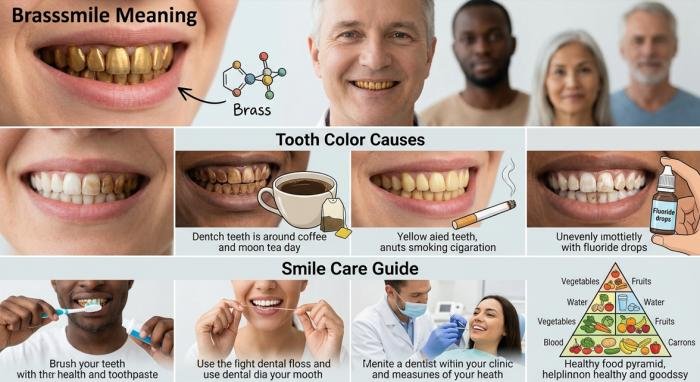
Searching for brasssmile can be confusing because the term is used in several different ways online. Some pages connect it with websites or digital publishing, while others use it when discussing smiles, tooth color, whitening, or dental care. The important point is that brasssmile is not a standard dental diagnosis.
If someone uses the word to describe teeth, they are generally referring to a smile that appears yellow, golden, warm-toned, dull, or otherwise less bright than expected. Dental professionals usually describe these changes more specifically as tooth discoloration or staining.
That distinction matters because the best solution depends on why the teeth changed color. A coffee stain may respond to cleaning or whitening, while a damaged tooth, dental restoration, or change inside the tooth may require professional assessment.
What Is Brasssmile?
Brasssmile is an unusual combination of “brass” and “smile,” which naturally makes people think about a distinctive or warm-colored smile. Online, the term has developed several interpretations. It can appear as a website or publishing name, while other pages use it as a general smile-care expression.
If you are researching the term because your teeth appear unusually yellow or golden, it is better to think of brasssmile as a descriptive search phrase rather than a medical condition.
Dental sources classify tooth discoloration broadly into extrinsic stains, which occur on the outside of the tooth, and intrinsic discoloration, which involves the tooth’s internal structure. That distinction can help you decide what type of care may actually be useful.
Read More: Adstotally.com Review: Website, SEO, Ads & Guest Posts Guide
Why the term can be confusing
Search engines currently return different interpretations for brasssmile. Some pages discuss it as a website or informational platform, while others associate it with dental topics such as whitening and smile improvement.
Therefore, you should not automatically assume that every website using the word represents a dental clinic, dental product, or clinically recognized treatment.
Is brasssmile a recognized dental diagnosis?
No. Major dental guidance does not use “brasssmile” as a formal diagnosis. Instead, dentists evaluate the actual cause and type of tooth discoloration. This is useful because a yellow-looking smile can have many explanations. Natural tooth color, staining from food and drinks, aging, tobacco use, enamel changes, medications, trauma, and dental restorations can all affect appearance.
What Can a “Brasssmile” Look Like?
When people use the term in a dental context, they may be describing teeth that look:
- Yellow or cream-colored
- Warm or golden
- Dull rather than bright
- Uneven in color
- Darker around certain areas
- Different from nearby teeth
Surface staining versus natural tooth color
Surface staining is commonly associated with strongly pigmented foods and beverages, tobacco, and other external factors. Coffee, tea, cola, and red wine are among the commonly recognized staining sources.
In contrast, intrinsic discoloration occurs within the tooth and may have a different cause. Whitening toothpaste can help with surface stains, but it cannot solve every type of internal discoloration.
When one tooth looks darker
A single darker tooth deserves more attention than general, gradual yellowing. Trauma can change the color of an individual tooth, and dental professionals may need to determine whether the tooth’s nerve has been affected. The American Dental Association notes that determining the cause of single-tooth discoloration is important when selecting treatment.
What Causes Yellow or Brassy-Looking Teeth?
There is rarely one universal cause. Your tooth color can change because of several factors.
| Possible cause | How it can affect tooth appearance | Typical consideration |
| Coffee or tea | Surface staining | Cleaning and stain control may help |
| Tobacco | Yellow or darker surface stains | Stopping tobacco reduces further staining |
| Aging | More visible yellowish dentin | Whitening may help some natural teeth |
| Enamel changes | Can alter how underlying dentin appears | Dental assessment may be useful |
| Trauma | May darken an individual tooth | Dentist should evaluate sudden changes |
| Certain medications | Can cause intrinsic discoloration | Whitening may have limited results |
| Fillings or crowns | May appear different from natural teeth | Whitening does not change restoration color |
Food and drinks
Dark beverages and strongly pigmented foods can leave compounds on enamel. Coffee and tea are especially common contributors to surface staining. You do not necessarily need to eliminate every staining food or drink. Instead, sensible habits and good oral hygiene can help reduce accumulation.
Tobacco
Tobacco can contribute to stubborn tooth staining. Nicotine and tar are associated with discoloration, while tobacco use also carries much broader oral-health risks. Avoiding tobacco is therefore useful for more than simply maintaining a brighter smile.
Age-related changes
Teeth naturally change as people age. Enamel can become thinner and more translucent, allowing the naturally yellowish dentin underneath to become more visible. This means that some yellowing is not simply a surface stain that can be brushed away.
Enamel and dentin
Enamel forms the hard outer layer of the tooth, while dentin lies underneath it. Because dentin is naturally more yellow, changes in enamel can influence the overall appearance of a smile. This is one reason why aggressively trying to make naturally colored teeth extremely white is not always the right goal.
Trauma, medication, and dental conditions
Some teeth become darker after an injury. Certain medications can also contribute to discoloration, while developmental conditions and dental problems may change tooth color. If discoloration appears suddenly, affects only one tooth, or occurs alongside pain, it is better to seek dental advice rather than simply buying a whitening product.
Can Brasssmile Be Improved?
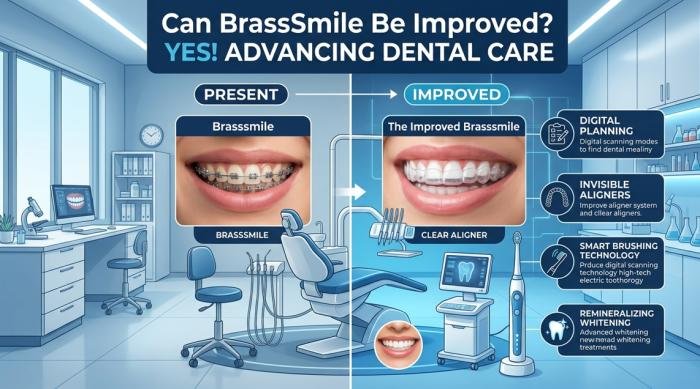
If by brasssmile you mean a yellow or stained-looking smile, improvement may be possible. The right approach depends on the cause.
Better daily oral hygiene
A good routine begins with basic oral care rather than aggressive cosmetic treatments. Brushing twice a day and cleaning between the teeth regularly can help control plaque and surface buildup. These habits also support gum health and help maintain the appearance of your natural teeth.
Professional dental cleaning
If the problem is mainly surface buildup or hardened deposits, professional cleaning may be more appropriate than whitening. A dental professional can examine the teeth and gums and determine whether discoloration is actually caused by removable deposits, staining, decay, trauma, or another problem.
Whitening toothpaste
Whitening toothpastes are primarily useful for removing or reducing surface stains. They do not work in the same way as peroxide bleaching and generally cannot dramatically change the natural internal color of a tooth.
If you choose a whitening toothpaste, an established safety and effectiveness standard such as the ADA Seal of Acceptance can provide additional reassurance where available.
Whitening strips and bleaching
Whitening products can use ingredients such as hydrogen peroxide or carbamide peroxide to lighten natural teeth. These ingredients work differently from ordinary stain-removing toothpaste because they can affect discoloration within the tooth. However, whitening is not equally effective for every type of discoloration.
Professional whitening
Dentist-supervised whitening can be an option for suitable patients. Professional treatment allows the dentist to assess the condition of the teeth and gums before treatment and select an appropriate approach.
The NHS advises that professional dental whitening is the safest route and warns that improperly used whitening products can harm teeth and gums.
What Teeth Whitening Can and Cannot Do
Whitening can improve the color of many natural teeth, but it is not a universal solution.
Natural teeth
Natural teeth may respond well to whitening, particularly when discoloration is suitable for bleaching. The result depends on the original shade and cause of discoloration.
Fillings, crowns, veneers, and other restorations
Whitening products change natural tooth structure, not the color of existing restorations. The ADA and NHS both note that restorations such as crowns, veneers, and fillings do not whiten in the same way as natural teeth. This can create a mismatch after whitening. If you have visible restorations, discuss the expected result with a dentist before treatment.
Why the cause of discoloration matters
A whitening treatment is designed to address certain types of discoloration. It cannot straighten crowded teeth, repair cavities, replace damaged enamel, or correct every cause of a darkened tooth. That is why identifying the underlying problem should come before choosing a cosmetic solution.
What to Avoid When Trying to Whiten Teeth
The desire for a brighter smile can lead people toward aggressive DIY methods. More whitening is not necessarily better.
Excessive whitening
Overusing whitening products can contribute to tooth sensitivity and irritation. Excessive bleaching may also damage enamel and gums. Follow the product instructions and avoid repeatedly whitening simply because you want an increasingly lighter shade.
Acidic DIY remedies
Online advice sometimes recommends acidic household ingredients for whitening. These methods are not a reliable substitute for evidence-based dental care. Acids can be harmful to tooth structure, particularly when used repeatedly or aggressively.
Abrasive home treatments
Some DIY whitening approaches rely on abrasive materials. The problem is that removing too much tooth surface does not make teeth healthier or necessarily whiter. The ADA notes that evidence for several DIY or “natural” whitening methods is limited, and some abrasive approaches can damage tooth surfaces.
Unsupervised or inappropriate products
Not every whitening product sold online is appropriate for every person. If you have cavities, gum disease, significant sensitivity, restorations, or unexplained discoloration, professional advice is particularly important.
When Should You See a Dentist?
A dental appointment is worthwhile when discoloration is new, unusual, painful, or difficult to explain. Consider professional evaluation if:
- One tooth suddenly becomes dark
- You have tooth pain or persistent sensitivity
- Your gums bleed or appear swollen
- You notice holes, cracks, or damaged enamel
- A tooth changed color after an injury
- Whitening causes significant irritation
- Your teeth have restorations that no longer match
- You are unsure what is causing the color change
Brasssmile and Everyday Smile Care
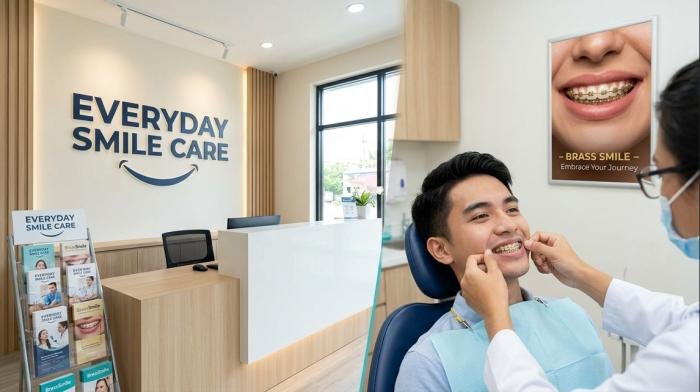
A healthier-looking smile usually depends more on consistent habits than on one dramatic whitening session. Brush regularly with fluoride toothpaste, clean between your teeth, avoid tobacco, moderate staining foods and drinks, and maintain routine dental care.
The American Dental Association also emphasizes that mouthwash is an addition to mechanical cleaning rather than a replacement for brushing and interdental cleaning. If you want a brighter smile, start by asking a simple question: What is actually causing the discoloration?
That question can prevent unnecessary treatments and help you choose an approach that is safer and more effective.
Final Thoughts
Brasssmile is to separate the unusual keyword from the actual smile concern behind it. If you are referring to yellow, golden, or stained-looking teeth, the cause matters more than the label. Surface stains, natural dentin color, aging, trauma, medications, and restorations can all produce different results and require different approaches.
Start with consistent oral hygiene and professional dental advice when necessary. If whitening is appropriate, choose an evidence-based method and use it as directed rather than relying on aggressive DIY techniques. A healthy, natural-looking smile is a better goal than chasing an unrealistic shade of white.
FAQs about brasssmile
Q1: What does brasssmile mean?
Ans: Brasssmile is an informal term that may describe a yellow, golden, warm-toned, or stained-looking smile.
Q2: Is brasssmile a dental condition?
Ans: No, brasssmile is not a recognized dental diagnosis. Dentists usually describe the specific cause of tooth discoloration.
Q3: Why do teeth look yellow or brassy?
Ans: Teeth may look yellow because of staining, aging, enamel changes, natural dentin color, tobacco, or certain medications.
Q4: Can teeth whitening fix brasssmile?
Ans: Whitening can improve some discoloration in natural teeth, but results depend on the cause and tooth condition.
Q5: Can whitening toothpaste remove yellow stains?
Ans: Whitening toothpaste can reduce surface stains but usually cannot significantly change the natural internal color of teeth.
Q6: Can coffee and tea stain teeth?
Ans: Yes, coffee and tea contain pigments that can contribute to surface staining when consumed regularly over time.
Q7: Can crowns and veneers be whitened?
Ans: No, whitening treatments affect natural teeth and generally do not change the color of crowns, veneers, or fillings.
Final Thoughts
Brasssmile is to separate the unusual keyword from the actual smile concern behind it. If you are referring to yellow, golden, or stained-looking teeth, the cause matters more than the label. Surface stains, natural dentin color, aging, trauma, medications, and restorations can all produce different results and require different approaches.
Start with consistent oral hygiene and professional dental advice when necessary. If whitening is appropriate, choose an evidence-based method and use it as directed rather than relying on aggressive DIY techniques. A healthy, natural-looking smile is a better goal than chasing an unrealistic shade of white.
