

If you have ever wondered what is wet shaving, the answer is simpler than it may sound. Wet shaving is a method of removing hair in which the skin and hair are moistened before a razor is used, usually with shaving cream, gel, or another lubricant. The moisture and lubricant help prepare the hair and create a smoother surface for the razor.
Wet shaving can mean using a standard cartridge razor with shaving gel, but the term is also commonly associated with traditional shaving equipment such as safety razors, straight razors, shaving brushes, and shaving soaps. These are related approaches, but they are not exactly the same thing.
For beginners, the most important part is not buying specialized equipment. Good preparation, a suitable shaving product, a sharp razor, gentle pressure, and correct shaving direction have a much greater effect on the experience. The American Academy of Dermatology (AAD) recommends wetting the skin and hair before shaving, applying shaving cream or gel, and shaving in the direction of hair growth.what you need to get started, how it compares with other shaving methods, and how to reduce common problems such as razor burn and ingrown hairs.
Read More: Marty Reisman Biography, Career, Achievements and Legacy
What Is Wet Shaving?
Wet shaving is the process of shaving after first wetting the skin and hair and applying a shaving lubricant such as cream or gel. A manual razor is then used to cut the hair at or close to the skin’s surface.The basic process is straightforward:
- Wet the skin and hair.
- Apply shaving cream, gel, or soap.
- Allow the product to soften and lubricate the hair.
- Move the razor gently across the skin.
- Rinse the skin and apply suitable post-shave care.
The AAD specifically recommends wetting the skin and hair before shaving because this helps soften the hair. It also recommends applying shaving cream or gel and shaving in the direction the hair grows.
Why Is It Called Wet Shaving?
The name comes from the use of water during the preparation and shaving process. Unlike a dry shaving routine, wet shaving normally involves deliberately wetting the skin and hair before using the razor.
Water alone is not the entire process, however. Most wet-shaving routines also use a shaving cream, gel, or soap to provide lubrication. This helps the razor move across the skin while reducing unnecessary friction.
Is Wet Shaving the Same as Traditional Wet Shaving?
Not necessarily.A person can wet shave with a regular cartridge razor. Traditional wet shaving usually refers to a more specific grooming style that may involve a double-edge safety razor or straight razor, shaving soap or cream, and sometimes a shaving brush.
Therefore, traditional wet shaving is one form of wet shaving, but not every wet shave has to use traditional equipment.This distinction matters for beginners because you do not need to purchase a safety razor, brush, bowl, and specialized soap simply to start wet shaving.
How Does Wet Shaving Work?
Wet shaving combines preparation, lubrication, and controlled razor movement.When water reaches the hair, it becomes softer and easier to cut. The shaving product then adds lubrication between the razor and skin. Finally, the razor cuts the exposed hair.
The goal is not to press harder or repeatedly scrape the same area. Instead, a controlled shave uses adequate preparation and light pressure.
Step 1: Wet Your Skin and Hair
Start by washing the area and wetting the hair with water. Shaving after a shower is one practical option because the skin and hair are already warm and moist.The AAD recommends wetting skin and hair before shaving and notes that shaving immediately after a shower can be a convenient time because the skin is warm and moist.
Step 2: Apply Shaving Cream or Gel
Apply a suitable shaving cream or gel over the area.If your skin tends to become dry or irritated, the AAD recommends looking for a shaving cream labeled for sensitive skin.
Do not allow the shaving product to dry completely before you begin. Dermatologists also recommend moisturizing shaving cream for people who are prone to razor bumps.
Step 3: Shave in the Direction of Hair Growth
Find the direction in which your hair naturally grows. This is often called shaving with the grain.Shaving against the direction of growth may produce a very close result, but it can also increase irritation and the likelihood of razor bumps for some people. The AAD recommends shaving in the direction the hair grows to help prevent razor bumps and razor burn.
Step 4: Use Gentle, Controlled Strokes
Avoid pressing the razor aggressively against your skin.Short, controlled strokes can make it easier to manage the razor and avoid repeatedly passing over the same area. For people who frequently experience razor bumps, dermatologists recommend avoiding excessive pressure and limiting repeated passes.
Step 5: Rinse the Razor Regularly
Rinse the blade after each swipe or frequently throughout the shave so that hair and shaving product do not accumulate.The AAD specifically recommends rinsing after each swipe.
Step 6: Rinse and Care for Your Skin
Once shaving is finished, rinse away the remaining shaving cream. A cool, damp cloth can be used afterward if your skin feels irritated.A suitable moisturizer or soothing aftershave can then be applied. If an aftershave burns or stings, dermatologists recommend stopping its use and choosing another product.
What Do You Need for Wet Shaving?
| Item | Purpose | Beginner guidance |
| Razor | Cuts hair at the skin surface | Choose a comfortable, sharp razor that suits your skin and technique |
| Water | Moistens and helps soften hair | Use before applying shaving product |
| Shaving cream or gel | Provides lubrication | Choose a moisturizing or sensitive-skin formula if needed |
| Shaving brush | Helps apply traditional shaving soap or cream | Optional rather than mandatory |
| Moisturizer or aftershave | Provides post-shave skin care | Choose a product that does not irritate your skin |
Razor
Several types of razors can be used for wet shaving.A cartridge razor is familiar to many people and can be used with water and shaving cream. A double-edge safety razor is another option and is often associated with traditional wet shaving. Straight razors are also used by experienced traditional shavers.
There is no single razor that is automatically best for everyone.If you frequently experience razor bumps, the AAD notes that a single- or double-blade razor may be worth trying rather than a multi-blade razor.
Shaving Cream, Gel, or Soap
The purpose of shaving cream or gel is to lubricate the shaving area and help prepare the hair.Traditional wet shavers may prefer shaving soap or a lather created with a brush. Beginners, however, can start with a conventional shaving cream or gel.The most important consideration is how your skin responds to the product.
Shaving Brush
A shaving brush is commonly associated with traditional wet shaving. It can be used to work shaving soap or cream into a lather and spread it over the skin.However, a shaving brush is not required for wet shaving. You can apply shaving cream or gel directly with your hands.
Aftershave or Moisturizer
Post-shave skin care can help keep the skin comfortable.A gentle moisturizer is a practical choice for many people. If you prefer an aftershave, choose one that agrees with your skin and discontinue it if it causes burning or stinging.
What Are the Benefits of Wet Shaving?

Wet shaving is popular because it combines hair preparation with lubrication and manual control.
It Softens the Hair: Moisture helps soften the hair before shaving. This is one reason dermatologists recommend wetting the skin and hair before using a razor.
It Adds Lubrication: Shaving cream and gel create a lubricated layer between the razor and skin. This can make the shaving process more comfortable than running a blade over dry skin.
It Can Produce a Close Shave: A manual razor cuts hair close to the skin, which can create a smooth-feeling result. How close the shave feels depends on the razor, hair characteristics, technique, and number of passes.A closer shave is not automatically better, particularly for people who regularly develop razor bumps.
It Offers Plenty of Equipment Choices: Wet shaving can be as simple or specialized as you want.A beginner might use a cartridge razor and shaving gel. Someone interested in traditional grooming might eventually move to a safety razor, brush, and shaving soap.That flexibility makes wet shaving accessible to people with different preferences and budgets.
Wet Shaving vs. Dry Shaving: What’s the Difference?
Wet shaving involves water and generally a shaving lubricant before using the razor. Dry shaving typically refers to shaving without wet preparation and is often associated with electric shaving.
Neither method is universally right for everyone. Skin sensitivity, hair type, shaving frequency, desired closeness, convenience, and personal technique all influence the choice.It is also worth remembering that a cartridge razor can be part of a wet-shaving routine. The term wet shaving describes the preparation and process more than one specific razor design.
Is Wet Shaving Better Than Electric Shaving?
Wet shaving may appeal to someone who enjoys a traditional manual routine and wants a close shave. Electric shaving may appeal to someone who prioritizes speed, convenience, or a different approach to managing facial hair.
Skin response is also important. Someone who experiences frequent irritation from a particular shaving method may need to experiment with different equipment or technique.The AAD suggests that people dealing with acne while shaving can experiment with electric or disposable-blade razors to determine what works best for their skin.
Is Wet Shaving Better Than Cartridge Shaving?
This comparison can be confusing because cartridge shaving and wet shaving are not opposites.A cartridge razor can absolutely be used for wet shaving when the skin is wetted and shaving cream or gel is applied beforehand.The more useful comparison is between a conventional cartridge routine and traditional wet shaving with equipment such as a safety razor.
Traditional shaving can require more technique and preparation. Cartridge shaving is generally familiar and convenient. Neither should automatically be described as healthier or superior for every person.For people who repeatedly develop razor bumps, dermatologists may recommend experimenting with a single- or double-blade razor and changing shaving technique.
Can Wet Shaving Cause Razor Burn or Razor Bumps?
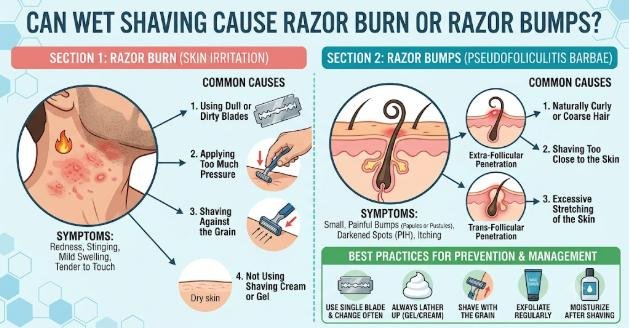
Yes. Wet shaving does not eliminate the possibility of irritation.Razor bumps can occur when shaving irritates the skin or when cut hairs curve back into the skin. The medical term pseudofolliculitis barbae is commonly used for razor bumps associated with ingrown hairs.
Ingrown hairs can cause small swollen bumps, itching, burning, or discomfort. People with tightly curled hair may be more susceptible because the hair can curve back toward the skin after being cut.
How Can You Reduce Razor Bumps?
Dermatologists recommend several practical changes:
- Wet the skin and soften the hair before shaving.
- Use moisturizing shaving cream.
- Identify the direction of hair growth.
- Shave in the direction of growth.
- Avoid pulling the skin tight.
- Use light pressure.
- Avoid unnecessary repeated strokes.
- Rinse the blade regularly.
- Replace disposable razors or blades after about five to seven shaves, according to AAD guidance.
- Store the razor somewhere dry between uses.
People with recurring ingrown hairs may need to avoid extremely close shaving. Mayo Clinic similarly recommends avoiding very close shaving and using a sharp single-blade razor when shaving is necessary.
Is Wet Shaving Good for Sensitive Skin?
Wet shaving can work for sensitive skin, but the technique and products matter.Start with adequate moisture and a gentle shaving product. Avoid excessive pressure and unnecessary passes over the same area. If your skin becomes irritated easily, a product designed for sensitive skin may be preferable.
The AAD recommends shaving cream labeled for sensitive skin for people with very dry or sensitive skin.However, no shaving method can guarantee irritation-free results. If a particular razor, cream, or aftershave consistently causes burning or inflammation, changing the product or technique may be more useful than simply shaving more carefully.
How to Wet Shave for the First Time
For a beginner, the following routine is enough to get started.
Clean the Area: Wash the skin gently before shaving. This removes surface oil and debris and prepares the area.
Wet the Hair and Skin: Use warm water or shave after a shower. The goal is to make the hair and skin sufficiently moist before applying shaving product.
Apply Shaving Cream or Gel: Cover the area with an even layer. Give the product a little time to work rather than immediately scraping it away with the razor.
Check Hair Growth: Facial hair does not necessarily grow in one uniform direction. The cheeks, chin, jawline, and neck can each have different growth patterns.
Make the First Pass With the Grain: Use gentle pressure and short, controlled movements. Avoid stretching the skin tightly.
Rinse the Razor: Rinse after each swipe or as frequently as needed to keep the blade clear.
Decide Whether Another Pass Is Necessary: Do not automatically keep shaving until every trace of stubble is gone. Repeated passes can increase irritation, especially for people prone to razor bumps.
Rinse the Skin: Remove the remaining shaving product with water.
Apply Post-Shave Care: A cool, damp cloth may help calm freshly shaved skin. Follow with a suitable moisturizer or soothing aftershave.
Dry and Store the Razor: Rinse the razor thoroughly and allow it to dry. The AAD advises storing razors in a dry area rather than leaving them in a wet shower or on a wet sink.
Common Wet Shaving Mistakes Beginners Should Avoid
Shaving Without Enough Moisture
Dry or poorly prepared hair can make shaving less comfortable. Wet the area properly before applying your shaving product.
Using Too Much Pressure
A razor does not need to be forced against the skin. Excess pressure can increase irritation and cuts.
Immediately Shaving Against the Grain
Going against hair growth may make the shave feel closer, but it can increase irritation and razor bumps for susceptible people.
Using a Dull Blade
A worn blade can make shaving more difficult and encourage repeated passes. The AAD recommends replacing disposable razors or blades after five to seven shaves to minimize irritation.
Going Over One Area Repeatedly
If an area is already cleanly shaved, additional strokes may provide little benefit while adding friction.
Leaving the Razor Wet
A damp storage environment is not ideal. Rinse the razor and store it somewhere dry between uses.
Using Products That Burn or Sting
A product that causes persistent burning is not something you need to tolerate as part of shaving. Stop using it and consider a gentler alternative.
How Often Should You Wet Shave?
Some people prefer a daily shave, while others shave every few days or only when their stubble becomes noticeable. Your preferred frequency can depend on hair growth, occupation, appearance preferences, and how your skin responds.
People who are prone to ingrown hairs should be particularly careful about extremely close shaving. NHS guidance recommends avoiding very close shaving and, where possible, not shaving every day when trying to prevent ingrown hairs.The right schedule is therefore the one that provides the appearance you want without repeatedly irritating your skin.
Does Wet Shaving Make Hair Grow Back Thicker?
No.
Shaving cuts the visible portion of the hair. It does not change the underlying hair follicle responsible for producing it.After shaving, newly regrown hair can feel rougher or look darker or thicker because the hair has been cut rather than naturally tapered at its end. That change in appearance does not mean shaving has caused the follicle to produce thicker hair.Wet shaving therefore does not permanently increase hair thickness or make hair grow faster.
Is Wet Shaving Only for Facial Hair?
No.
Shaving can be used on many areas of the body. The AAD describes shaving as a common method of removing unwanted hair for both men and women.
However, the technique should be adapted to the area being shaved. Skin thickness, hair direction, contours, and sensitivity vary throughout the body.
Advice designed for facial shaving should not automatically be applied to every body area, particularly areas where the skin is more sensitive or difficult to see.
Can Wet Shaving Prevent Ingrown Hairs?
Wet shaving can reduce some factors associated with irritation, but it cannot guarantee that ingrown hairs will never occur.Mayo Clinic explains that an ingrown hair develops when a removed hair grows back and curves into the skin. Shaving, especially very close shaving, can contribute to this problem.
Using warm water, lubricating shaving cream, a sharp blade, light pressure, and shaving in the direction of hair growth can make ingrown hairs less likely for some people.If ingrown hairs repeatedly appear, changing the shaving method or discussing the problem with a healthcare professional may be appropriate.
When Should You See a Dermatologist?
Occasional shaving irritation is common, but persistent or severe problems deserve attention.Consider professional medical advice if you repeatedly develop:
- Painful or extensive razor bumps
- Persistent ingrown hairs
- Significant swelling or inflammation
- Recurrent skin infections
- Dark marks or scarring
- Symptoms that do not improve after changing shaving habits
The AAD notes that persistent razor bumps can contribute to permanent skin changes such as grooves and raised scars, and recommends seeing a board-certified dermatologist when changing shaving habits does not resolve the problem.For an isolated ingrown hair, treatment is often unnecessary. However, Mayo Clinic recommends medical care when ingrown hairs do not clear or cause recurring problems.
Final Takeaway: What Is Wet Shaving?
So, what is wet shaving? In simple terms, it is shaving with a wet preparation: the skin and hair are moistened, a shaving lubricant is applied, and a razor is used to remove the hair.You do not need expensive traditional equipment to begin. A suitable razor, water, shaving cream or gel, and sensible technique are enough for a basic routine.
The most important habits are straightforward: soften the hair before shaving, use adequate lubrication, avoid excessive pressure, shave in the direction of growth, rinse the razor regularly, and keep the blade in good condition. These practices are consistent with dermatologist guidance for reducing irritation and razor bumps.
Wet shaving is not automatically better than every other shaving method, and no routine works identically for every person. The best approach is the one that gives you the desired result while keeping your skin comfortable. If recurring razor bumps, ingrown hairs, or significant irritation continue despite improving your technique, professional dermatological advice is the sensible next step.
Wet Shaving FAQs
Q1: What is wet shaving?
Ans: Wet shaving is a shaving method in which the skin and hair are moistened before a razor is used, usually with shaving cream, gel, or soap. The moisture helps soften the hair, while the shaving product provides lubrication.
Q2: Is wet shaving the same as traditional shaving?
Ans: No. Traditional wet shaving usually refers to a more specific style involving equipment such as safety razors, straight razors, shaving brushes, and shaving soap. Wet shaving itself is broader and can include a standard cartridge razor used with water and shaving cream.
Q3: Do I need a safety razor for wet shaving?
Ans: No. A safety razor is optional. You can wet shave with a conventional cartridge razor as long as you properly wet the skin and hair and use an appropriate shaving lubricant.
Q4: Is wet shaving better for sensitive skin?
Ans: Wet shaving can be suitable for sensitive skin when performed gently, but it does not guarantee irritation-free results. The AAD recommends wetting the skin and hair, using shaving cream intended for sensitive skin when appropriate, and shaving in the direction of hair growth.
Q5: Does wet shaving cause razor bumps?
Ans: Wet shaving itself does not automatically cause razor bumps, but shaving can irritate the skin and contribute to ingrown hairs. Shaving too closely, shaving against the grain, stretching the skin, and using poor technique can increase the risk.
Q6: How often should I replace a shaving blade?
Ans: The AAD recommends replacing disposable razors or blades after about five to seven shaves to minimize irritation. Individual blade life can vary depending on the razor, hair, frequency of use, and manufacturer’s instructions.
Q7: Can I wet shave with a cartridge razor?
Ans: Yes. A cartridge razor can be used as part of a wet-shaving routine. Wet the skin and hair first, apply shaving cream or gel, shave gently, and rinse the blade regularly.
Q8: Should I shave with or against the grain?
Ans: For people concerned about irritation and razor bumps, dermatologists generally recommend shaving in the direction of hair growth. Shaving against the grain can increase irritation for some people.
Q9: Does shaving make hair grow back thicker?
Ans: No. Shaving cuts the hair at the skin’s surface and does not change the follicle that produces the hair. Regrowth can feel rougher because the freshly cut hair has a blunt end, but shaving does not make the follicle produce thicker hair.
Q10: Do I need a shaving brush?
Ans: No. A shaving brush is optional. It is commonly used in traditional wet shaving to create and apply lather from shaving soap or cream, but beginners can apply shaving cream or gel with their hands.
Q11: What should I put on my skin after wet shaving?
Ans: Rinse away the shaving product and consider using a gentle moisturizer or suitable soothing aftershave. If a product burns or stings, stop using it. A cool, damp cloth can also be used immediately after shaving when the skin feels irritated.
Q12: Can women use wet shaving?
Ans: Yes. Wet shaving is not limited to men. Anyone can use shaving as a hair-removal method, although the appropriate technique and equipment may vary depending on the body area and individual skin or hair characteristics.
