
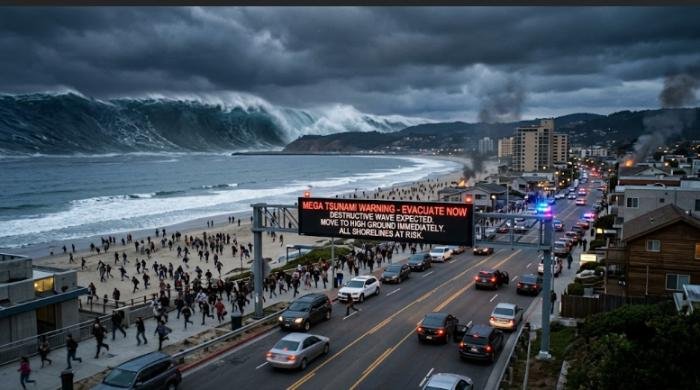
Mega tsunami warning is one of the most serious emergency alerts issued for coastal communities. Although mega tsunamis are extremely rare, they have the potential to generate enormous waves capable of causing widespread destruction in a very short time. Understanding what this warning means, how it differs from a standard tsunami alert, and how to respond can help protect lives and property.
Unlike ordinary ocean waves caused by wind, tsunamis result from the sudden displacement of a large volume of water. In rare cases, massive underwater earthquakes, volcanic eruptions, or giant landslides can produce exceptionally large waves known as mega tsunamis. When scientists detect conditions that could lead to such an event, authorities may issue a mega tsunami warning to encourage immediate action.
Many people mistakenly believe they have plenty of time to react after receiving a warning. In reality, nearby coastlines may have only minutes before the first wave arrives. That is why understanding warning systems and preparing in advance are just as important as knowing what to do during an emergency.
What causes these rare events, how modern warning systems work, and why acting quickly can save lives.
Read More: W Magazine History, Fashion Trends & Celebrity Style
What Is a Mega Tsunami Warning?
Mega tsunami warning is an official emergency notification issued when experts determine that an unusually large tsunami could threaten coastal regions. Its primary purpose is to alert residents, visitors, and emergency responders so they can evacuate vulnerable areas before dangerous waves reach shore.
Which indicates that conditions are being monitored, a warning signals that immediate protective action may be necessary. Emergency management agencies rely on seismic data, ocean monitoring systems, and computer models to assess the level of risk before issuing public alerts.
What Is a Mega Tsunami?
A mega tsunami is an exceptionally large tsunami generated by a massive and sudden displacement of water. While most tsunamis are triggered by powerful underwater earthquakes, mega tsunamis are more commonly associated with enormous landslides, volcanic collapses, or other rare geological events.
One of the best-known examples occurred in Alaska’s Lituya Bay in 1958, where a massive landslide generated a wave that stripped vegetation from surrounding mountainsides. Events of this scale are exceptionally uncommon but demonstrate the immense power of rapidly displaced water.
What Does a Mega Tsunami Warning Mean?
When a mega tsunami warning is issued, it means experts believe there is a credible risk that dangerous tsunami waves could impact one or more coastal areas. The warning is based on scientific analysis rather than speculation and is intended to give people enough time to move to safer locations.
Receiving this type of warning does not always mean the largest possible waves will occur. Instead, it indicates that the threat is significant enough to require immediate attention. Waiting for visual confirmation can be extremely dangerous because tsunami waves often travel much faster than people expect. During a warning, authorities typically recommend:
- Evacuating low-lying coastal areas immediately.
- Moving to higher ground or designated evacuation zones.
- Following official instructions through emergency broadcasts.
- Avoiding beaches, harbors, and river mouths.
- Remaining in safe areas until authorities declare the danger has passed.
What Causes a Mega Tsunami?
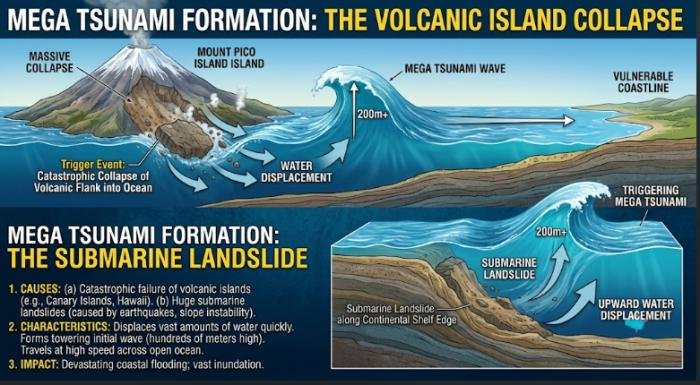
Understanding the causes of a mega tsunami warning helps explain why these alerts are taken so seriously. Although mega tsunamis are rare, the natural events capable of triggering them release enormous amounts of energy within seconds.
Massive Underwater Earthquakes
The most common cause of tsunami formation is a powerful earthquake beneath the ocean floor. When tectonic plates suddenly shift, they can lift or drop large sections of the seabed, displacing huge volumes of water. Scientists immediately analyze earthquake magnitude, depth, and location to determine whether tsunami warnings should be issued.
Large Landslides
Some of the world’s highest tsunami waves have resulted from giant landslides plunging into lakes, bays, or oceans. As millions of tons of rock and soil rapidly enter the water, they push massive volumes outward, creating enormous waves near the impact area. These localized events may generate waves much taller than those produced by distant earthquakes, making them particularly dangerous for nearby communities.
Volcanic Eruptions
Volcanoes located on islands or beneath the sea can also generate tsunamis. Explosive eruptions, collapsing volcanic slopes, or underwater explosions may suddenly displace seawater and create destructive waves. Modern monitoring networks continuously observe active volcanoes because volcanic activity can sometimes produce tsunamis with little warning.
Rare Natural Events
Although extremely uncommon, scientists have also studied the possibility of asteroid impacts or massive glacier collapses generating giant waves. These scenarios remain rare but help researchers improve hazard models and emergency planning.
Understanding these potential causes allows emergency agencies to respond quickly when unusual geological activity is detected. Advanced monitoring systems, discussed in the next section, play a critical role in determining whether a mega tsunami warning should be issued and how communities can prepare before waves reach the coast.
How Does a Mega Tsunami Warning System Work?
Modern tsunami warning systems combine advanced technology with real-time scientific analysis to detect potential threats as quickly as possible. The goal is to determine whether an earthquake, landslide, or volcanic eruption has generated waves capable of endangering coastal communities.
When experts identify a significant risk, they may issue a mega tsunami warning to encourage immediate evacuation and other safety measures. Although no warning system is perfect, today’s technology has greatly improved the speed and accuracy of tsunami detection compared to previous decades.
Earthquake Detection
The warning process usually begins with a global network of seismic monitoring stations. These instruments detect earthquakes within seconds of their occurrence and measure key details such as magnitude, depth, and location. Scientists carefully analyze this information to determine whether the earthquake occurred beneath the ocean and whether it displaced enough
Water to generate a tsunami. Not every underwater earthquake produces dangerous waves, so rapid scientific evaluation is essential before issuing public alerts.
Ocean Monitoring Buoys
Specialized deep-ocean buoys, often called DART (Deep-ocean Assessment and Reporting of Tsunamis) buoys, help confirm whether a tsunami has actually formed. These systems measure changes in underwater pressure caused by passing tsunami waves and transmit real-time data to monitoring centers.
Because tsunami waves travel across the open ocean with relatively small heights, these buoys provide valuable confirmation long before the waves reach populated coastlines.
Tide Gauges and Coastal Monitoring
Coastal tide gauges continuously record sea level changes at ports and shorelines. If abnormal water movements are detected, scientists compare the readings with computer models to estimate wave height, arrival time, and areas most at risk.
With satellite communication and weather monitoring systems, these observations help authorities update or cancel warnings as new information becomes available.
Emergency Alerts and Public Communication
Once experts confirm a credible threat, emergency agencies distribute warnings through multiple communication channels, including:
- Emergency mobile phone alerts
- Television and radio broadcasts
- Weather alert systems
- Government websites
- Social media updates
- Community sirens in coastal areas
Mega Tsunami Warning vs. Tsunami Watch
Many people confuse a warning with a watch, but understanding the difference can help you respond appropriately during an emergency.
| Feature | Mega Tsunami Warning | Tsunami Watch |
| Threat Level | Immediate or highly likely danger | Possible threat under evaluation |
| Public Action | Evacuate immediately | Stay alert and prepare |
| Wave Confirmation | Expected or detected | Not yet confirmed |
| Urgency | Very High | Moderate |
| Official Advice | Move to higher ground without delay | Monitor updates and be ready to act |
Natural Warning Signs You Should Never Ignore
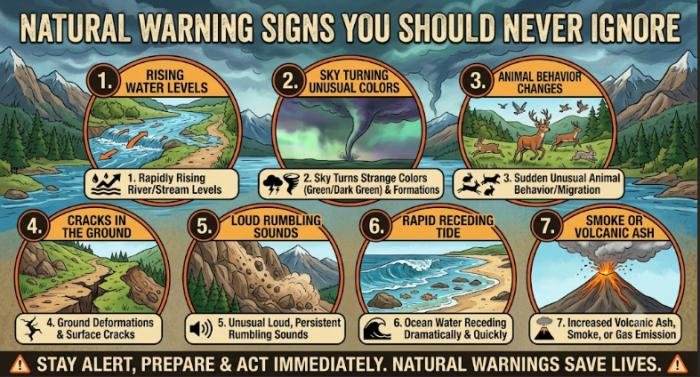
Technology plays an important role in tsunami detection, but nature often provides warning signs as well. If you are near the coast and notice any of the following, do not wait for an official alert—move to higher ground immediately.
A Strong or Long-Lasting Earthquake
you experience a powerful earthquake while near the coast, especially one that lasts more than 20 seconds, treat it as a natural tsunami warning. Ground shaking may indicate that the ocean floor has shifted, increasing the risk of a tsunami. The safest action is to evacuate immediately after the shaking stops, even if no official announcement has been made.
The Ocean Suddenly Recedes
One of the most well-known natural warning signs is the sudden retreat of seawater, exposing areas of the seabed that are normally underwater. Although this unusual sight may attract curious onlookers, it is actually a dangerous signal.
The receding water often precedes the arrival of a powerful tsunami wave. Anyone near the shoreline should leave immediately and head to higher ground.
A Loud Roaring Sound from the Ocean
Some tsunami survivors describe hearing a loud roar similar to a freight train or jet engine before the waves arrived. This sound may result from the massive movement of water toward the shore.
If you hear an unusual roaring noise from the sea, do not investigate. Evacuate as quickly as possible.
Rapid Changes in Water Level
A sudden rise or fall in sea level, unusual currents, or fast-moving water in rivers connected to the ocean may indicate that tsunami waves are approaching.
These changes can occur within minutes, making immediate evacuation essential.
Official Emergency Alerts
The most reliable warning is an official notification from emergency management agencies. If a mega tsunami warning is issued for your area, do not wait to see the waves. Follow evacuation instructions immediately and remain in a safe location until authorities announce that the danger has passed.
Areas Most at Risk from Mega Tsunamis
Although tsunamis can occur in many parts of the world, some regions face a higher risk because of their geological location. These include:
- Japan, due to its position along active tectonic plate boundaries.
- Indonesia, where frequent earthquakes and volcanic activity increase tsunami risk.
- Chile, located along the Pacific Ring of Fire.
- Alaska, known for powerful earthquakes and landslide-generated tsunamis.
- The Pacific Islands, where many communities are exposed to seismic activity.
- The western coasts of North and South America, which can be affected by Pacific Ocean tsunamis.
What to Do During a Mega Tsunami Warning
When a mega tsunami warning is issued, every second matters. Acting quickly and following official guidance can significantly increase your chances of staying safe. The biggest mistake people make is waiting to see the waves before evacuating. Tsunamis can travel at incredible speeds, and by the time they become visible, it may already be too late.
Evacuate Immediately
Mega tsunami warning, leave low-lying coastal areas without delay. Move inland or to higher ground using designated evacuation routes whenever possible. Do not stop to collect unnecessary belongings, as every minute counts during an emergency.
If you are visiting an unfamiliar coastal area, pay attention to evacuation signs and maps. Many tsunami-prone communities have clearly marked routes leading to safe locations.
Stay Away from Beaches and River Mouths
Many people are tempted to watch large waves from the shoreline. This is extremely dangerous. Tsunami waves can arrive much faster than expected and often carry powerful currents capable of sweeping away people, vehicles, and buildings.
River mouths, harbors, and coastal inlets are also hazardous because tsunami waves can travel inland through waterways.
Follow Official Instructions
Listen to updates from emergency management agencies through emergency alerts, radio broadcasts, television, or trusted government websites. Do not rely on rumors or unverified social media posts, which may spread misinformation during disasters.
Remember that a tsunami is not always a single wave. Multiple waves may arrive over several hours, and later waves can sometimes be larger than the first.
Help Others Safely
If possible, assist children, older adults, people with disabilities, and visitors who may not be familiar with local evacuation procedures. However, never delay your own evacuation if doing so places you in danger.
Do Not Return Until Authorities Say It Is Safe
Even after the first waves have passed, dangerous currents and flooding may continue. Wait for official announcements before returning to coastal areas.
How to Prepare Before a Mega Tsunami Warning Happens
Preparation is one of the most effective ways to reduce the impact of a tsunami. Although no one can prevent natural disasters, families can take practical steps to improve their readiness.
Build an Emergency Kit
Keep a disaster supply kit in an easily accessible location. It should include:
- Drinking water for several days
- Non-perishable food
- First-aid supplies
- Flashlights and extra batteries
- Portable phone charger
- Important medications
- Copies of essential documents
- Emergency contact information
Review and update your emergency kit at least twice a year.
Know Your Evacuation Route
Find out whether your home, workplace, school, or hotel is located within a tsunami evacuation zone. Learn the fastest route to higher ground and practice using it with your family. Many coastal communities provide evacuation maps through local emergency management offices.
Create a Family Emergency Plan
Discuss where family members will meet if separated during an emergency. Choose an out-of-town contact person who can help coordinate communication if local phone networks become overloaded. Practice evacuation drills regularly so everyone understands what to do during a mega tsunami warning.
Can Mega Tsunamis Be Predicted?
Scientists cannot predict the exact time or location of future mega tsunamis. However, they can rapidly detect earthquakes, volcanic eruptions, and other geological events that may generate dangerous waves. Today’s warning centers use sophisticated computer models, satellite communications, seismic networks, tide gauges, and deep-ocean sensors to estimate tsunami size and arrival times.
Research continues to improve forecasting accuracy through artificial intelligence, enhanced ocean monitoring, and faster data processing. While prediction remains impossible, early detection has become much more reliable than it was decades ago.
Historical Mega Tsunami Events and Lessons Learned
Although mega tsunamis are extremely rare, several historical events have helped scientists better understand their causes and impacts.
| Event | Year | Cause | Key Lesson |
| Lituya Bay, Alaska | 1958 | Massive landslide | Landslides can generate extraordinarily high local waves. |
| Vajont Dam, Italy | 1963 | Reservoir landslide | Human-made reservoirs can also experience destructive displacement waves. |
| Anak Krakatau, Indonesia | 2018 | Volcanic flank collapse | Volcano monitoring is critical for coastal safety. |
Expert Recommendations for Staying Safe
Disaster preparedness specialists recommend taking the following steps before any coastal emergency:
- Sign up for official emergency alert services.
- Learn the natural warning signs of tsunamis.
- Keep emergency supplies readily available.
- Practice evacuation drills with your family.
- Never ignore evacuation orders.
- Stay informed through trusted government agencies.
- Review emergency plans before traveling to coastal destinations.
Conclusion
A mega tsunami warning should always be taken seriously. Although mega tsunamis are exceptionally rare, their destructive power makes rapid response essential. Understanding how warning systems work, recognizing natural warning signs, and preparing an emergency plan can make a significant difference during a disaster.
Modern technology has greatly improved tsunami detection, but public awareness remains one of the strongest defenses against loss of life. Whether you live near the coast or are planning a seaside vacation, knowing how to respond to a mega tsunami warning helps you make informed decisions during emergencies.
Preparedness is not about expecting the worst—it is about being ready to act wisely if the unexpected happens. By staying informed, following official guidance, and practicing evacuation plans, you can better protect yourself, your family, and your community.
FAQS about mega tsunami warning
Q1: What is a mega tsunami warning?
Ans: A mega tsunami warning is an official emergency alert issued when experts believe an unusually large tsunami may threaten coastal areas, requiring immediate protective action.
Q2: What causes a mega tsunami?
Ans: Mega tsunamis are most commonly caused by massive landslides, powerful underwater earthquakes, volcanic collapses, or other events that rapidly displace huge amounts of water.
Q3: How is a mega tsunami different from a regular tsunami?
Ans: A mega tsunami generally involves much larger wave heights, often caused by landslides rather than earthquakes, and can produce severe localized impacts.
Q4: Can scientists predict mega tsunamis?
Ans: Scientists cannot predict them in advance, but they can quickly detect triggering events and issue warnings using seismic networks and ocean-monitoring technology.
Q5: What should I do if a mega tsunami warning is issued?
Ans: Evacuate immediately to higher ground, avoid beaches and river mouths, follow official instructions, and do not return until authorities declare the area safe.
Q6: Which areas are most vulnerable to mega tsunamis?
Ans: Coastal regions near active tectonic plate boundaries, including parts of Alaska, Japan, Indonesia, Chile, and the Pacific Islands, face higher tsunami risks.
Q7: Are mega tsunamis common?
Ans: No. Mega tsunamis are extremely rare compared to regular tsunamis, but their potential impact makes preparedness and early response critically important.
